
Toon Assistant screenshots from 1997
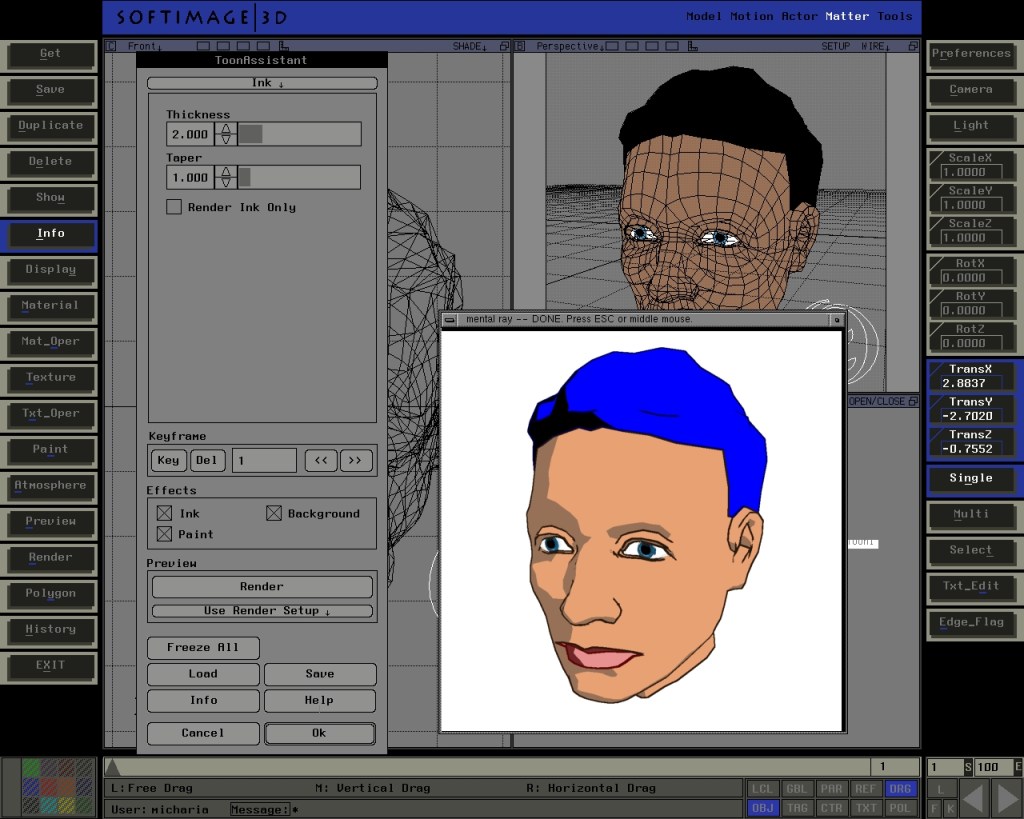
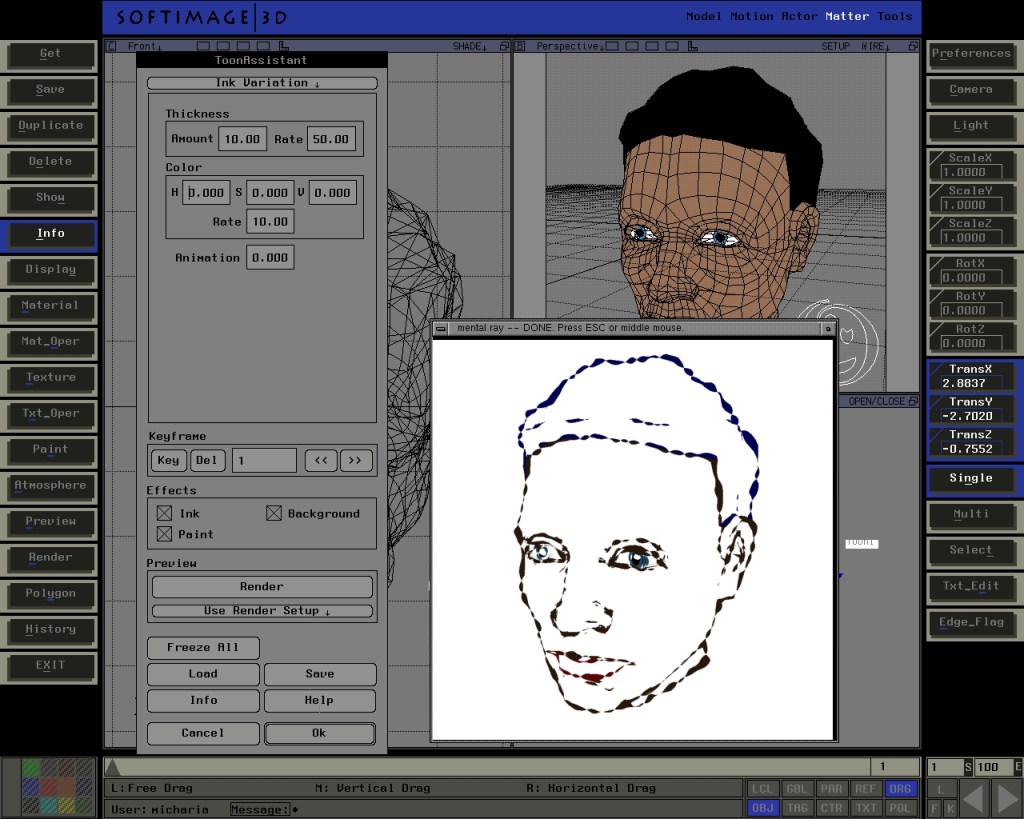
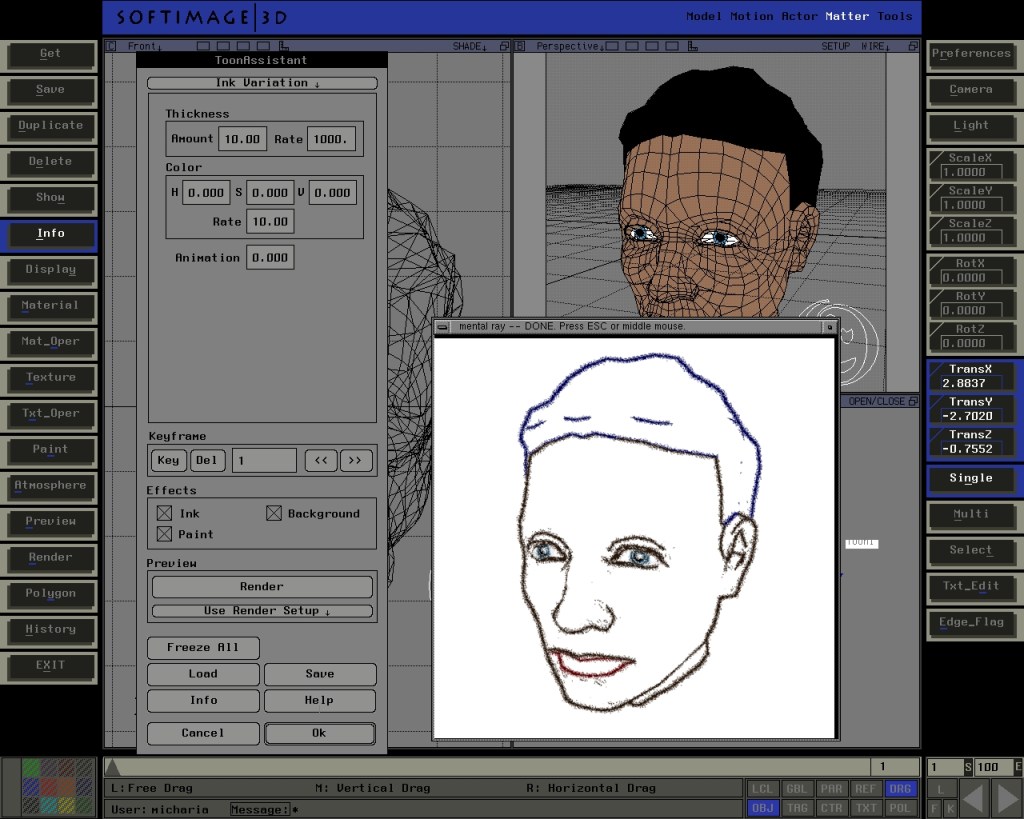
An AI overview of Toon Assistant:
Toon Assistant was a notable plug-in developed for the legacy SOFTIMAGE|3D high-end animation system and the mental ray renderer in the late 1990s. [1]
Created by Softimage’s Special Projects R&D team (led by figures like Michael Arias, who would later direct Tekkonkinkreet), the tool was engineered to handle cel-shading and non-photorealistic 2D toon rendering directly out of 3D computer graphics. [1, 2]
Core Functionality
During the late ’90s, blending 3D assets seamlessly into traditional 2D cel animation was a major technical hurdle. Toon Assistant streamlined this process through a two-step method: [2]
- Inking (Outlines): Managed via a “Lens” shader attached to the camera, which calculated object boundaries and drew precise ink contours. [2]
- Coloring (Cel-Shading): Managed via a custom “Material” shader applied to 3D geometry to output flat or stepped, banded gradients rather than smooth, photorealistic gradients. [2]
The main benefit of Toon Assistant was automation; it allowed animators to apply standardized 2D rendering parameters across an entire 3D scene globally, significantly speeding up production pipelines for feature-length animated films. [2]
Historical Significance
Toon Assistant and Softimage’s toon shaders were heavily relied upon during the genesis of modern hybrid 2D/3D anime and feature animation. It was used extensively on groundbreaking productions of that era, including:
- Studio Ghibli’s Princess Mononoke (1997)
- DreamWorks Animation’s The Prince of Egypt (1998) [2]
Are you exploring this for archival/vintage CGI research, or are you trying to recreate classic 90s cel-shaded aesthetics in a modern workflow like Blender or Autodesk Maya?
[1] https://hp.michaelarias.net
[2] https://3dvf.com

