Friday Flashback #621


Softimage Launches New Version of Mental Ray Distributed Rendering Environment

LOS ANGELES, May 16, 1996 — As part of its latest high-end 3-D modeling, animation and rendering software, Softimage Inc. is introducing a more powerful version of mental ray, its distributed, fully programmable rendering environment for Softimage® 3D. With this new release, available with Softimage 3D Extreme or as a concurrent user network license, mental ray is significantly more capable, faster and easier to use. It supports many new innovations, including interface enhancements, an extensive library of shaders and effects, a robust development environment and support for cross-platform distributed rendering. All mental ray features, including distributed rendering, are now available for the first time on Intel® Pentium® Pro, Alpha and MIPS® RISC 4400-based systems for the Microsoft® Windows NT® operating system and Silicon Graphics® platforms.

In addition, Softimage has announced attractive pricing for network and standalone concurrent user licenses of mental ray that will enable customers to build extremely cost-effective distributed rendering networks, also called renderfarms. Renderfarms speed production work and lower costs.

As part of the Electronic Entertainment Expo (E3) here, Softimage is demonstrating a massive renderfarm, with mental ray, running in a network of more than 30 Windows NT and Silicon Graphics laptops, single and multiprocessor workstations, and servers based on Intel Pentium Pro, Alpha and the MIPS RISC 4400 microprocessor.

Several independent software developers, including Lightscape Technologies Inc. and The VALIS Group, are demonstrating new plug-in applications that enhance mental ray’s rendering capabilities. These plug-in applications are based on Softimage’s new software development kit.

Through a combination of advanced ray-tracing capabilities, procedural shaders, volumetric rendering, distributed processing and a programmable architecture, mental ray has established the benchmark for rendering quality by producing the industry’s most detailed, photorealistic images for films, videos, commercials and games.

Most recently, Buf Compagnie (France) used mental ray to produce imagery for the feature film “The City of Lost Children” (“La Citédes Enfants Perdus”).

R/Greenberg Associates (New York) used mental ray to create a photorealistic version of the Statue of Liberty for an Oldsmobile Aurora commercial.

Digital Domain (Los Angeles) used mental ray to produce a stunningly realistic animated character, the T-Meg, for the Terminator 2 3-D attraction at Universal Studios Florida.

“Even the best animation system is not complete without the extendible capabilities of a fully functional, high-quality rendering solution,” said Daniel Langlois, founder of Softimage and senior director at Microsoft. “With mental ray, artists can easily create the type of complex, photorealistic and innovative imagery that provide a competitive edge in the industry.”

All mental ray enhancements are available for Windows NT-based workstations and servers and Silicon Graphics systems. The enhancements include the following:

  • Distributed rendering. Mental ray is a distributed rendering solution that can take advantage of multiprocessor and networked hardware, including Windows NT-based workstations and servers and Silicon Graphics systems, to dramatically reduce the time it takes to render a complex animation scene. Availability of mental ray on Windows NT allows customers to choose from a variety of high-performance, low-cost hardware platforms based on Alpha, Intel Pentium Pro and MIPS R4400 microprocessors for fast, cost-effective renderfarm solutions.
  • Shader library. Softimage 3D Extreme ships with an extensive library of mental ray shaders and effects, including some of the most challenging effects such as hair, smoke, fog and environmental effects such as sunsets and sunrises. Shader libraries are updated continually at no charge through Softimage’s World Wide Web site, . Through an Internet browser, customers can quickly view an effect in action to determine how it can be used in an animation scene.
  • Enhanced programmability. With mental ray programmable shaders, animators can differentiate their imagery with unique, visually exciting custom effects. An open application programming interface based on C, made available through the Softimage software development kit (SDK), enables customers to directly access the mental ray rendering engine for building custom shaders that match their unique creative environments. To help bolster a community of plug-in applications, Softimage in February introduced the Softimage Developers Connection program.
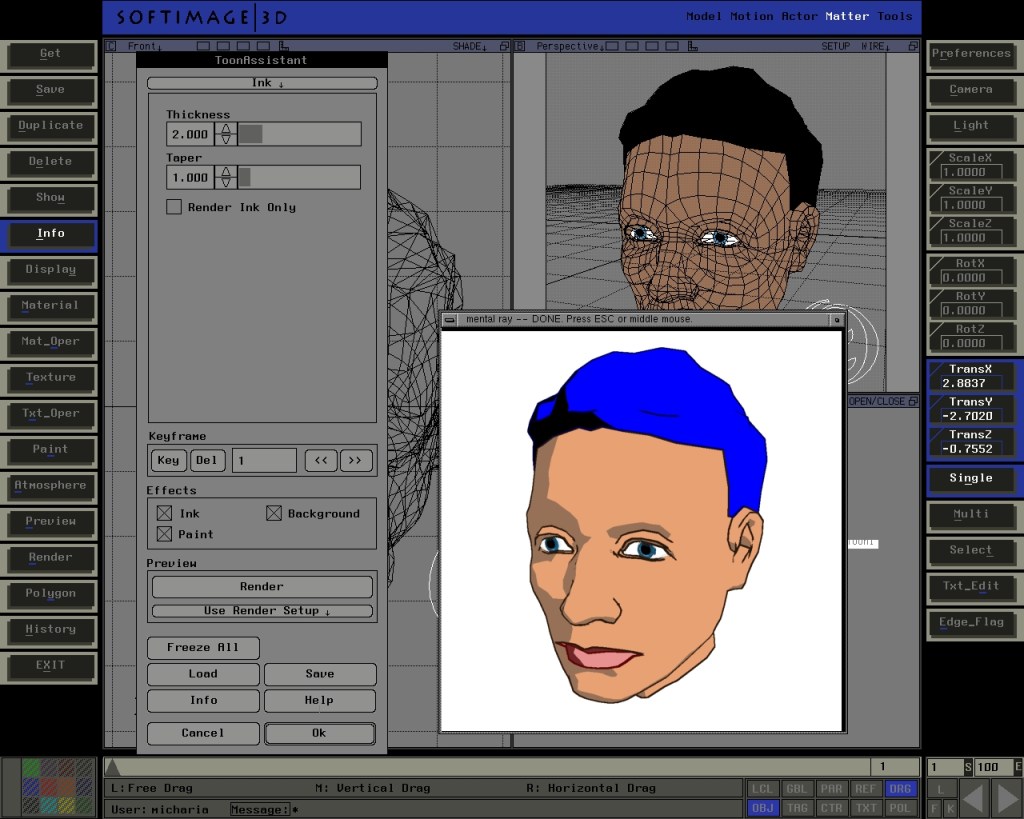
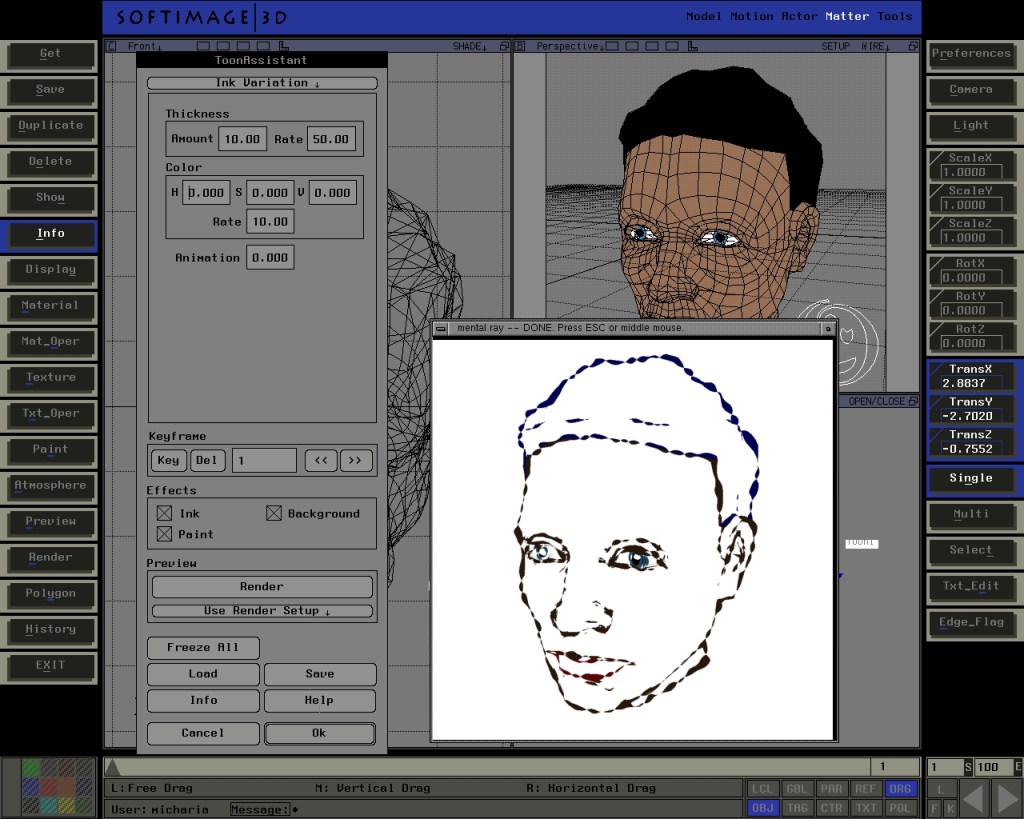
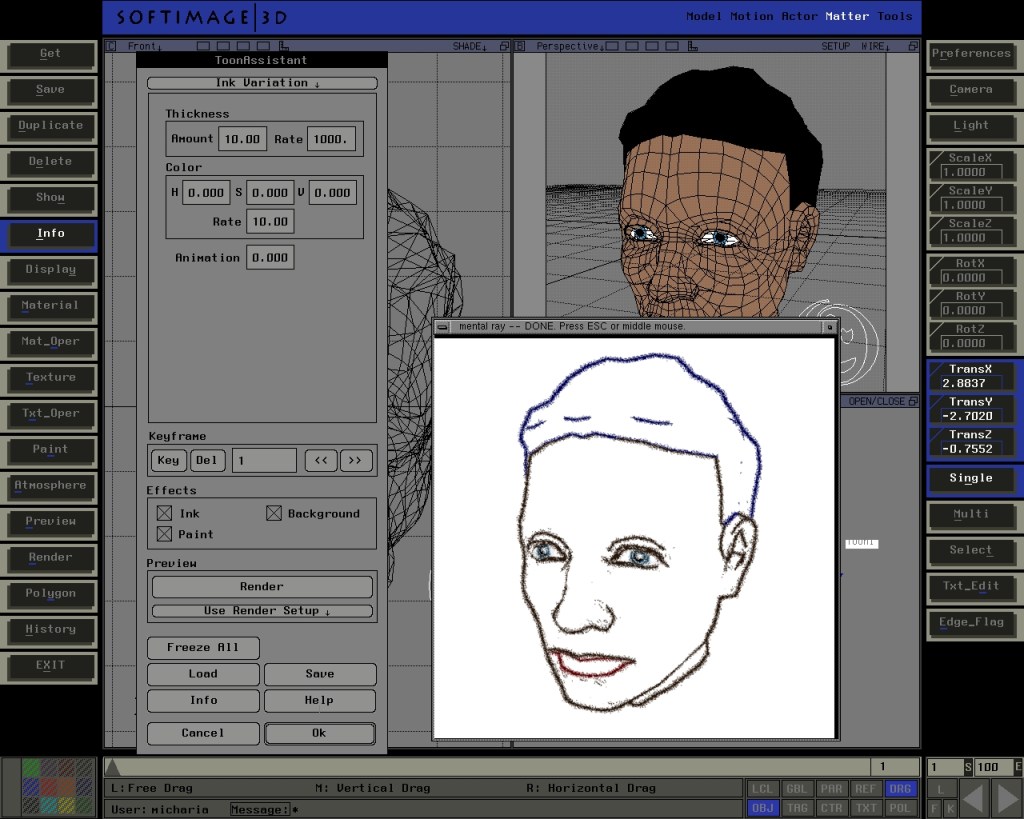
  • Interface enhancements. Mental ray is now fully integrated into Softimage 3D, making it easier to render images. A new render preview window also saves time in getting the right effects. A new shader ball allows customers to find the desired effect quickly.

In addition to mental ray distributed rendering, Softimage 3D version 3.5 includes many other significant enhancements including full NURBS (nonuniform rational B-spline) modeling, an enhanced particle animation system and other features.

Plug-in Applications

As part of E3, several ISVs plan to demonstrate applications developed with the Softimage SDK. Lightscape Technologies (San Jose, Calif.) is demonstrating the integration of the Lightscape Radiosity Server and Softimage 3D using the Softimage SDK. A viewer linked to the server will provide real-time display and navigation of the radiosity solution from within Softimage 3D. The VALIS Group (Tiburon, Calif.)will announce it plans to ship several cross-platform, procedural shaders that eventually will be included as part of its Shader of the Month Club for Softimage 3D. The VALIS Group develops and markets special-effects applications and a series of procedural shaders for Renderman.

Pricing and Availability

Softimage 3D and Softimage 3D Extreme are shipping today for the Silicon Graphics platform; Windows NT-based versions are scheduled to be available in August. Licensed users of Softimage 3D version 3.5 can obtain networked or standalone, cross-platform concurrent user mental ray licenses. Approximate U.S. prices are single license, $2,495; four-pack, $7,995; eight-pack, $13,995; 16-pack, $23,995; 24-pack, $29,995; and 48-pack, $47,995.

Founded in 1986, Softimage develops software for media-rich applications including video, film, interactive games and CD-ROM applications. Products include Softimage 3D (high-end modeling, animation and rendering), Softimage Eddie (compositing) and Softimage Toonz (2-D cel animation). The company was acquired in 1994 by Microsoft Corp. Additional information about Softimage and Microsoft can be found via the Internet at http://www.softimage.com/ and http://www.microsoft.com/ respectively.

Friday Flashback #620


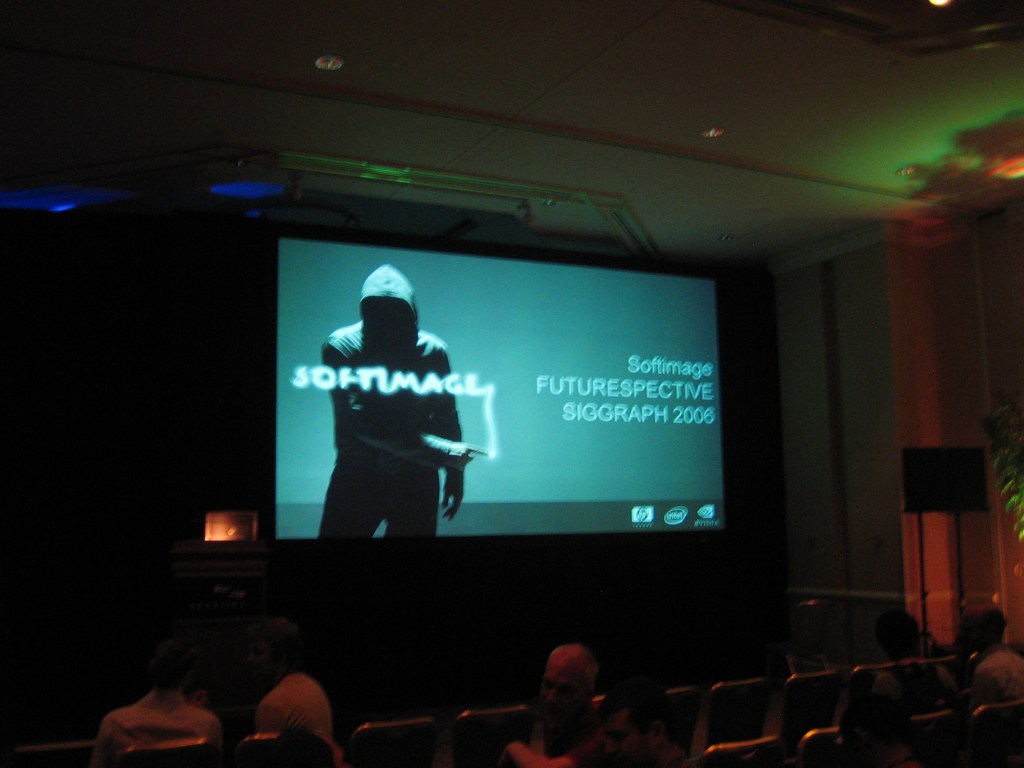
2006: Getting Into Character

Softimage Co.
20 Years of Character Animation Innovation
Founded in 1986, Softimage has always been the company that character
animators look to for intuitive tools that allow them to work artistically.
Our founding principles are rooted in the idea that, regardless of its
technological underpinnings, 3D content creation is a fundamentally
artistic pursuit – that technology should empower artists, not restrict
them. For the last twenty years Softimage has set a breakneck pace of
innovation that has driven the 3D industry forward.

1988 Softimage launches Creative Environment 1.0 at SIGGRAPH. For the first time
ever, all 3D content creation processes are integrated in a single application. This heralds
a new approach to 3D content creation – one where animator-focused 3D tools take the
place of more traditional, CAD oriented concepts.

1991 Softimage introduces Inverse Kinematics, Envelopes, and Constraints in Creative
Environment’s Actor module. Combined with traditional techniques, such as editing and
keyframing, these technologies allow artists to create realistic CG character motion for
the first time.

Actor module technology goes on to win an Award from the Academy of Motion Picure
Arts and Sciences.

1992 Channels performance capture technology adds motion capture to the character
animator’s arsenal, allowing real-world actor movement to drive 3D characters.

1993 With lifelike character animation a reality, increasingly complex projects demand
realistic lighting, rendering and effects technologies. Softimage integrates mental ray®
rendering technology, making sophisticated effects and distributed rendering technology
available in a 3D content creation package for the first time.

1995 The SOFTIMAGE® Sega Design Toolkit is released, representing the first ever
3D content pipeline for 3D game characters.

1998 Softimage introduces the Animation Sequencer: the world’s first high-level
clip-based animation editing tool. This is the precursor of the powerful SOFTIMAGE|XSI®
Animation Mixer.

2001 Softimage introduces powerful new tools for character creators:

  • Animation tools, like Bridge transitions, High-Level Editing tools and IK/FK blending
    make it easier for artists to create and tune realistic animations.
  • The industry’s fastest high-end subdivision surface modeler, and advanced Hair tools
    are key innovations for creating organic characters.
  • Realtime Shaders provide game developers with the first truly programmable
    display pipeline in a 3D content creation tool, making it possible to prototype,
    visualize and preview in-game effects without exporting to an on-target viewer.


2005 Non-destructive character setup tools allow modeling, texturing, and even
rigging changes to be made to fully rigged and animated characters. GATOR (the
Generalized Attribute Transfer Operator) allows artists to easily transfer any surface
properties – from textures to weight maps to shape animation and more – between
models of any complexity or topology. Artists no longer have to start from scratch
when building a character.

Ultimapper generates and transfers cinematic quality normal and other surface attribute
maps. This allows game artists to easily bake high levels of surface detail into low-resolution, engine-friendly models.

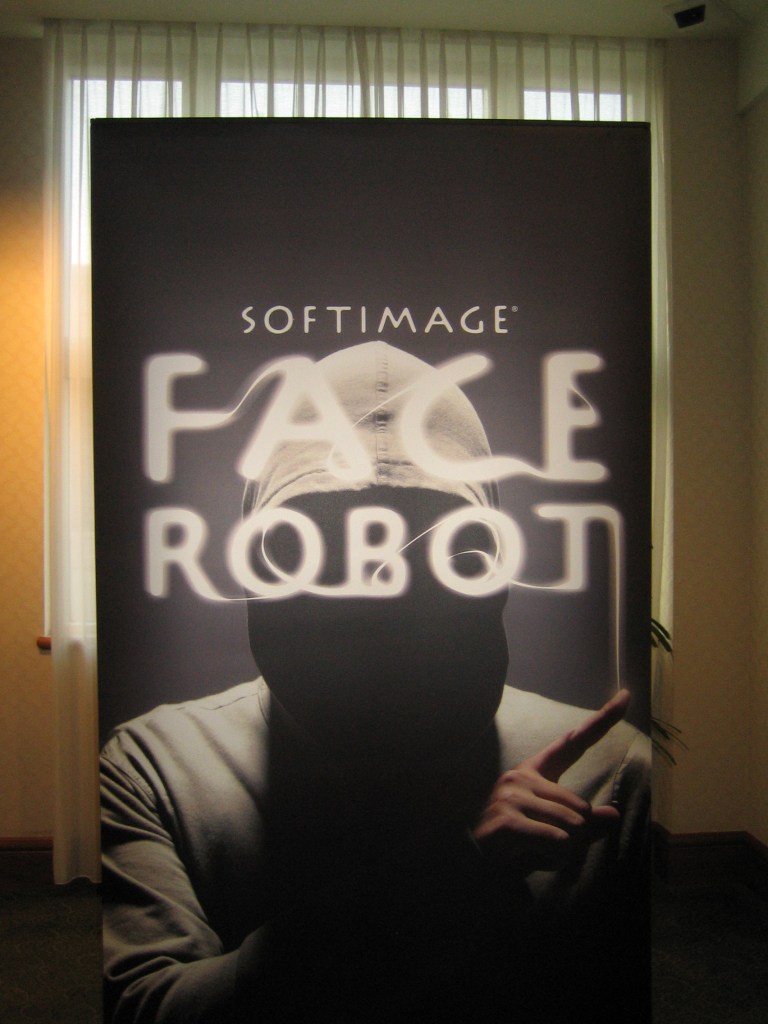
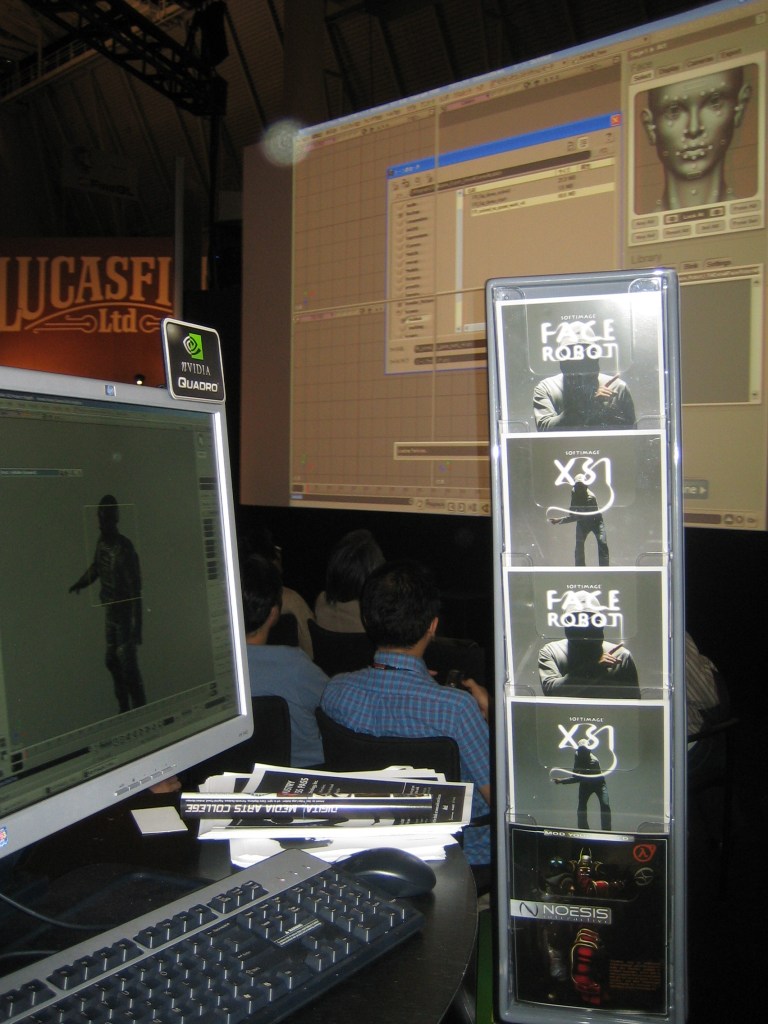
2006 Softimage releases SOFTIMAGE®|FACE ROBOT™ 1.0, a groundbreaking face
animation toolset that drastically reduces the time required to prepare a face for animation.
Face Robot represents a completely new way of preparing and animating realistic and
lifelike faces.

Friday Flashback #618


SOFTIMAGE PRODUCTS INTEGRAL TO INDUSTRIAL LIGHT & MAGIC PRODUCTIONS FOR SUMMER ’99 AND BEYOND

From Ancient Egypt to Far-Away Galaxies, ILM Artists Tap Avid/Softimage Graphics and Animation Software to Create Motion Picture Effects Now and into the Next Millenium

Tewksbury, Mass. (August 10, 1999) – Avid Technology, Inc. (NASDAQ: AVID) today announced extensive use of its Softimage graphics and animation products by Industrial Light & Magic (ILM) on recent motion picture work including “Star Wars: Episode I The Phantom Menace,” “The Mummy” and the gigantic Tarantula in “Wild Wild West,” as well as renewal of Avid’s Softimage Co.’s strategic relationship with the Academy Award-winning visual effects facility that extends into the new millenium. ILM, a division of Lucas Digital Ltd. LLC and the world’s largest effects house, pushes the limits of digital wizardry using applications such as Softimage 3D for character animation and modeling, Softimage Matador™ for painting, and Softimage Elastic Reality? for morphing .

“Softimage software has been an important aspect for pre-visualizing and finishing the multiple thousands of effects shots we’ve had on recent jobs, including an incredible number of scenes involving computer-generated [CG] animated characters in ‘Star Wars: Episode I The Phantom Menace’,” said Rob Coleman, Animation Director on the Star Wars prequel. “Whether we’re setting up complex animation rigs to bring the right behavior to our digital characters, keyframing their animation, or staging natural movement via motion capture, these tools empower ILM artists to raise the bar of believability with the CG imagery we create.”

CG Feats That Reach for the Stars

At ILM, Softimage 3D was the main character animation tool used for the more than 60 digitally created creatures, monsters and robots that grace the far-away galaxy in “Star Wars: Episode I The Phantom Menace.” The movie has nearly 2000 total effects shots, 800 of which involved CG character animation—sometimes thousands of characters, spanning are almost half of the film’s screen time. Softimage 3D was used extensively on hundreds of shots to achieve this feat and to give these fantastical CG figures believable expressions and movements.

The Animation Pipeline

Within ILM’s motion capture department, Softimage 3D and Softimage Live were used to provide motion information to the animation team, and to rough out 3D animation up to the final shot. Completed directly in Softimage 3D using a motion capture system with real-time capability, the files could be delivered the same day in Softimage 3D format. According to motion capture supervisor Seth Rosenthal, “Our pipeline was developed to take animation or motion capture data and bring it into Softimage 3D, where it could be modified on the same familiar models, with the same animation controls that had been used for hand animation.”

Part Human or Mostly Machine: Imhotep, 50’000 Droids and a Steam-Powered Spider

While the performance aspect of animation is crucial, getting the physics right is equally important because CG creations typically need to act and interact seamlessly within a live-action environment. “Once we’ve defined a character and its idiosyncrasies, the first step is creating the physical performance and acting. That’s all done in Softimage 3D.” says Hal Hickel, a lead animator who worked on Boss Nass and the destroyer droids in “Star Wars: Episode I The Phantom Menace.” “The closer you get to producing something relatively human, the more difficult it is to achieve a realism that’s acceptable.

” Much of ILM’s work in CG has been geared towards finding easier ways to create fleshy, organic characters and simulate movement logical to human and semi-human figures. For the creepy skeleton-and-spilling guts form of Imhotep in “The Mummy,” Dennis Turner and an animation team actually built a skeleton and muscle system—to be animated either through traditional keyframe animation, or motion capture, complete with 300 digital muscles done in Softimage 3D that pull, tug, ripple and flex in all the appropriate places.

“Star Wars: Episode I The Phantom Menace” introduced a different challenge: hard-surface robots with jointed parts. As Hickel recalls, ILM’s technical animators used Softimage 3D to build skeletons, determining how the mechanical parts would work. “The destroyer droids were complex because they had to fold up, unfold and attack. And it’s not a cheat—all the mechanical parts move and work together. So, the controls for this—creating the basic animation model that can be animated—was a huge task.

” Another enormous accomplishment is the 80-foot tall, steam-powered arachnid weapon arsenal (Tarantula) operated by Dr. Loveless from an open cockpit in “Wild Wild West.” One of ILM’s most complicated hard-surface models built to date, the Tarantula, animated in Softimage 3D, moves across the landscape with a heavy, machine-like gait on eight CG spider legs, each of which contains 150 moving parts.