From Carbine Studios (a Softimage customer), here’s the WildStar™ trialer. Cinematics by Blur (Softimage for rigging/animation/effects and 3ds Max for rendering/other effects).

From Carbine Studios (a Softimage customer), here’s the WildStar™ trialer. Cinematics by Blur (Softimage for rigging/animation/effects and 3ds Max for rendering/other effects).
Quick demo of the zoom on cursor feature in the 2012 Advantage Pack, in an ICE Tree view.
http://vimeo.com/27590997
Walt Disney Animation Studios has licensed its XGen visual effects and animation software, used for Rapunzel’s hair in “Tangled” as well as fur, feathers and foliage, to software giant Autodesk.
Under the exclusive five-year license, Autodesk will turn XGen into commercial software available to animation and vfx professionals and to students. Announcement came at the Siggraph computer graphics conference.
via Mouse’s XGen to Autodesk – Entertainment News, Siggraph, Media – Variety.
Update: See Planet Softimage for more details and vidoes.
Features:
via Autodesk – Subscription Advantage Pack for Autodesk Softimage 2012.
via Autodesk Announces Subscription Advantage Packs for 2012 Entertainment Software
The Subscription Advantage Pack for Autodesk Softimage 2012 software delivers practical production tools to Softimage artists and technical directors. The Advantage Pack provides:
PS: New options for ICE RBD = Bullet
Project Photofly 2.1 Now Available
New features include FBX support.
via Project Photofly 2.1 Now Available – It is Alive in the Lab.
Read the 5 things here. Here’s 3 things I pulled from their list:
I’m guessing the 288 hours per frame was just part of the 200,000 hours per day ?
via ‘Transformers: Dark of the Moon’s’ Powerful Visual Effects: 5 Things to Know About How They Did It – The Hollywood Reporter. via Mathieu Leclaire on the XSI Mailing List
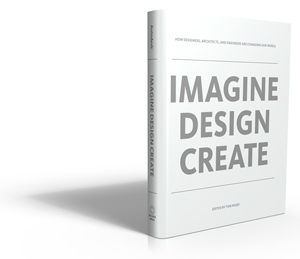 THE AUTODESK BOOK
In March, 2011, Autodesk released its first book: Imagine, Design, Create: How Designers, Engineers and Architects are Changing Our World. The book provides a wide-ranging look at how the creative process and the tools of design are dramatically changing – and where design is changing in the coming years. Bringing together stories of good design happening around the world, the book shows how people are using fresh design approaches and new capabilities to solve problems, create opportunities and improve the way we live and work.
WHY A BOOK
Imagine, Design, Create expresses Autodesk’s vision for design as a means to help people innovate and prosper. As a physical artifact, it is a tangible representation of the power of design, which we can give to our customers and partners, providing them with a continual source of inspiration as well as a persistent reminder of Autodesk’s role to foster design.
You can buy the book on Amazon. As an employee, I got a free copy.
The book doesn’t really focus on Autodesk products: in fact, they’re hardly ever mentioned. It’s all about the end results and the general design process. I haven’t read the book yet, but one thing caught my eye in the chapter about the massively multiplayer Lego game:
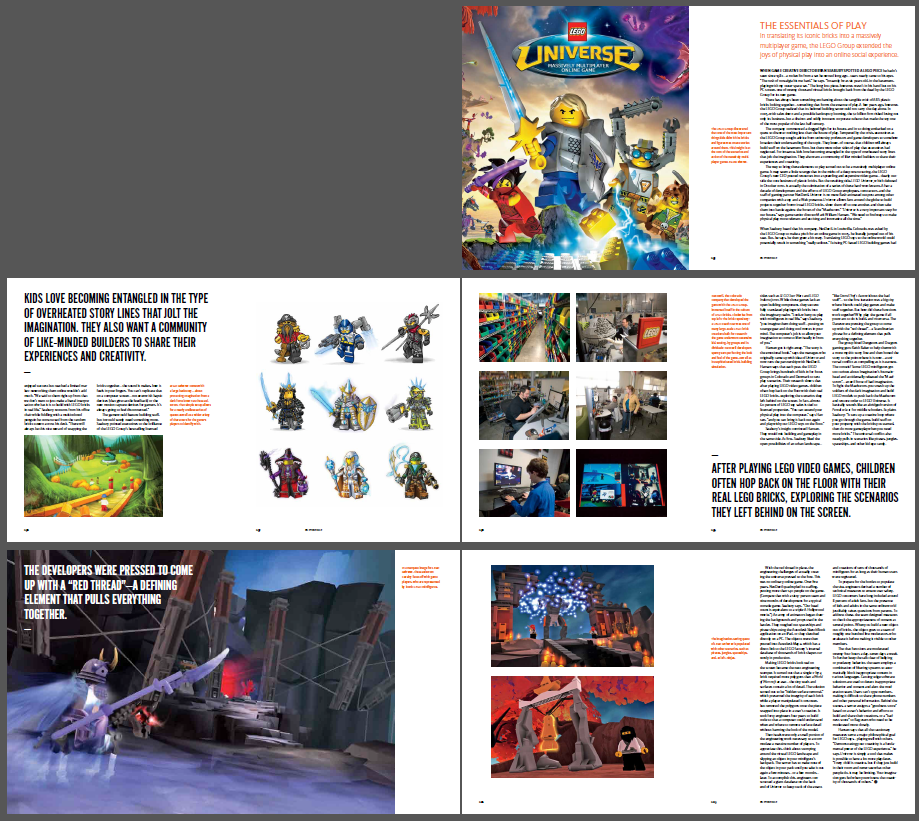
Making LEGO bricks look real on
the screen became the next engineering
stumper. It turned out that a single 2-by-4
brick required more polygons than a World
of Warcraft avatar—the tiny studs and
surfaces contain a lot of detail. The solution
turned out to be “hidden surface removal,”
which preserved the integrity of each brick
while a player manipulated it onscreen,
but removed the polygons once the piece
snapped into place in a user’s creation. It
took forty engineers four years to build
code so that a computer could understand
when and where to remove surface detail
without harming the look of the model.
40 engineers for 4 years? Imagine what you could do to Softimage or Maya or Max with those kind of resources 😉
Quickly set a preset for the most common poly and surface primitives. Softimage 2012 only.
via BlackRedKing Blog » Default Primitive settings for Softimage 2012.
One of the greatest challenge was to create animations where pages of paper should fold to different geometrical objects. So we developed some “PaperTools” in Softimage ICE, simplifying this task.
 eX-SI
eX-SI 