Yeah, I used a Repeat node 😉


Yeah, I used a Repeat node 😉
On Windows, I use Process Monitor, Process Explorer, and Dependency Walker.
On Linux, the primary troubleshooting tool is strace. strace is a tool that traces all the system calls that a running process makes. When a program is experiencing problems associated with I/O, strace can often help in quickly isolating the problem, since (almost) all I/O happens through system calls.
Here’s the basic syntax:
strace -o /tmp/out -f XSI
-o writes the output to a log file
-f tells strace to follow forks, and trace all child processes
-p can be used to attach to an already running process
As well as system calls, strace also tracks signals that were thrown in the process. If a process is crashing due to a segmentation fault, it is worth investigating what was happening before the fault occurred; you can find where the fault occurred by searching for — SIGSEGV in the strace output.
strace output has been added as an XSI history log client under Linux. If you search the output of strace for the string write(-1, you should see all the scripting commands as they are executed. This is useful for associating system calls with the commands that caused them to execute.
There’s also ltrace ltrace is a tool that traces all the calls to shared library functions. It can be extremely useful with XSI because almost all of the XSI code lies in shared libraries. Note that calls from a given library to itself are generally not traced because the call is address-relative. Some useful options to ltrace are:
-C: remove leading underscores from C-linkage symbols and demangle C++-linkage symbols
-o and -f: same as for strace
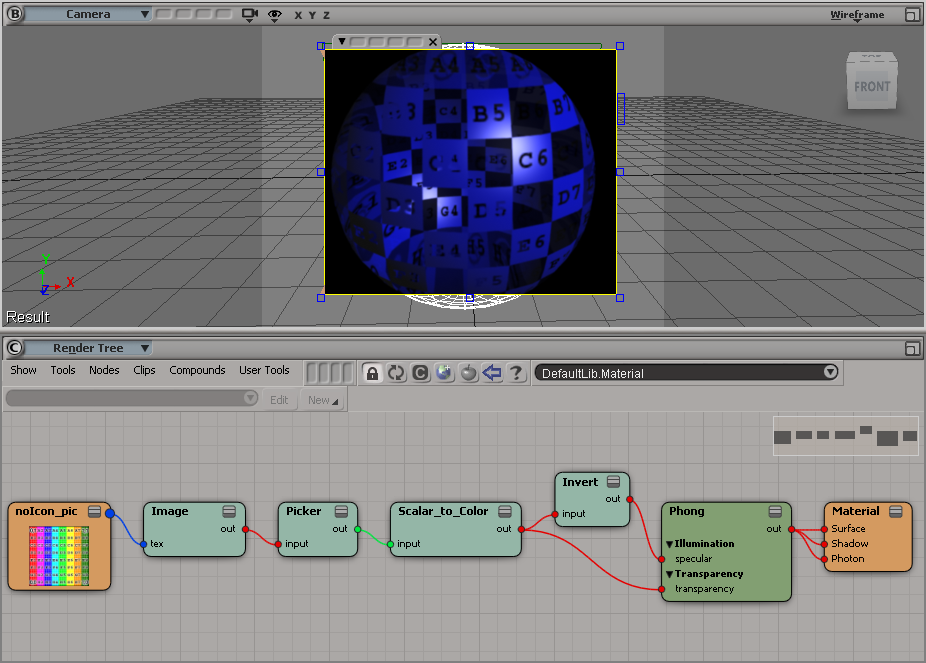
Quick demo of the zoom on cursor feature in the 2012 Advantage Pack, in an ICE Tree view.
http://vimeo.com/27590997
If you’ve got a group of objects, how do you emit one particle from each object in the group?
BONUS: I show the 2012 AP Zoom on Cursor feature in the ICE Tree 😉
Walt Disney Animation Studios has licensed its XGen visual effects and animation software, used for Rapunzel’s hair in “Tangled” as well as fur, feathers and foliage, to software giant Autodesk.
Under the exclusive five-year license, Autodesk will turn XGen into commercial software available to animation and vfx professionals and to students. Announcement came at the Siggraph computer graphics conference.
via Mouse’s XGen to Autodesk – Entertainment News, Siggraph, Media – Variety.
By default, any network drive that times out is “marked as invalid” for 5 minutes (300 seconds), and you’ll see a message like this in the script log:
# INFO : 4000 - Server '\\server' is unreachable. Marked as invalid for the next 300 seconds
The timeout interval is controlled by the environment variable SI_FILEPATH_ACCESSRETRYDELAY.
Setting SI_FILEPATH_ACCESSRETRYDELAY to 0 will force Softimage to always try to access the files on the network drive. That might be useful if your network has extremely poor reliability.
From an XSI mailing list thread about this message, here’s a bit more info about how Softimage resolves paths:
XSI first checks the last path that an image has been found. This
might be offline drive X:. If a drive times out, we don’t try to
check that location for a while because otherwise it’d be really slow.
At this point, XSI resort to searching for the file from the user
path, using its search logic.
So that warning isn’t a problem – unless your “user path” was really
set to X:, in which case, go fix the path in the external file list.
The path where XSI finds the image is called the “resolved path”.–Luc-Eric
Another couple of cases for runonce.bat!
Update: See Planet Softimage for more details and vidoes.
Features:
via Autodesk – Subscription Advantage Pack for Autodesk Softimage 2012.
 eX-SI
eX-SI 