Friday Flashback #170


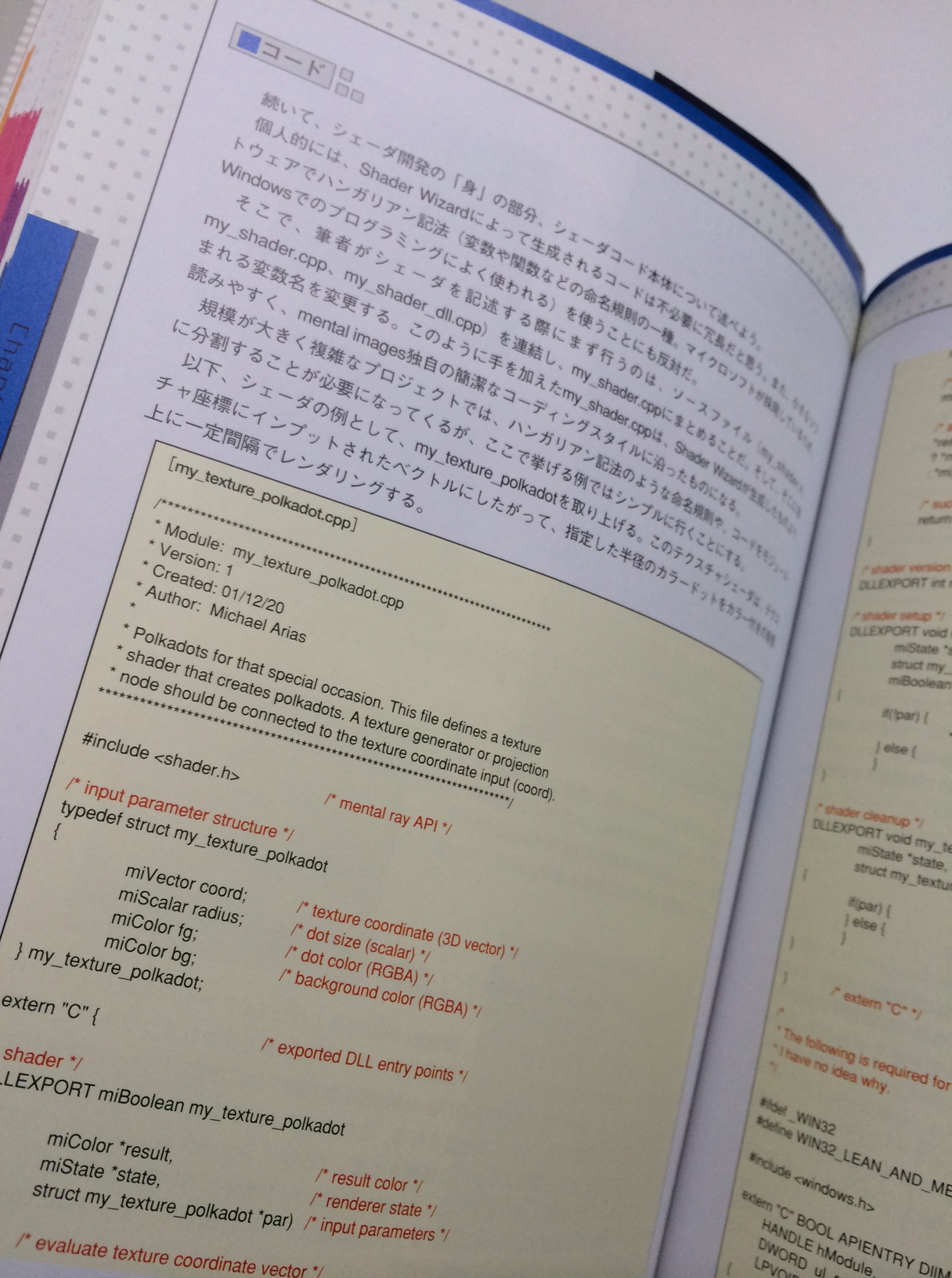
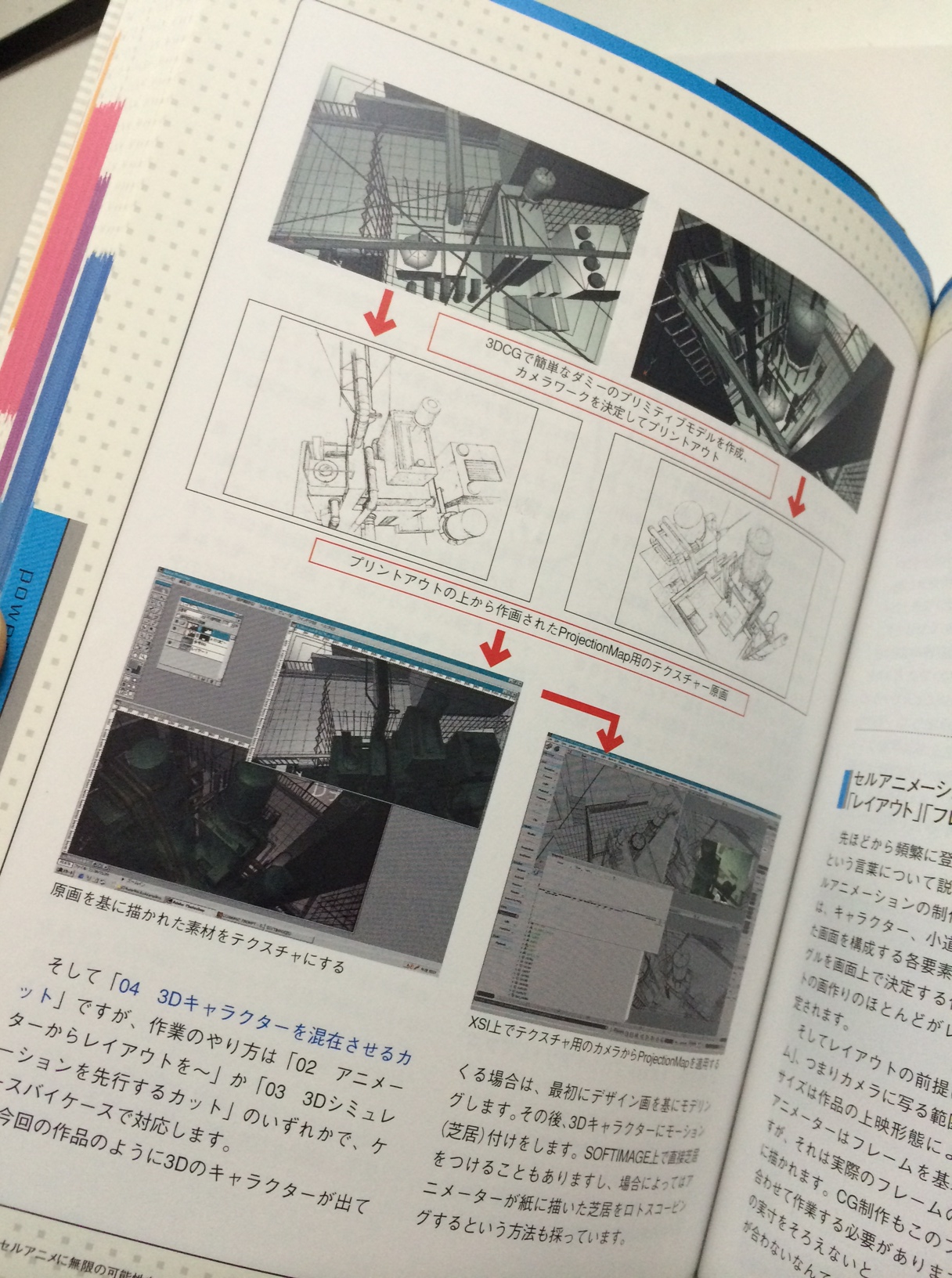
SOFTIMAGE Creative Environment User Guide
1903982_10203232017072204_728509182_n
Apparently that creature on the cover is known as Creeps (note: link is to a youtube video that isn’t available in my country).
Posted on FB by Lucca Prasso

Note the names of the books in the background: “How to be a Genius”, “How to cook a Dinosaur”, and “The Complete DNA”.

Also, what’s up with a “User Guide” being labelled a “Comprehensive Reference Guide” ?

Friday Flashback #169


Ruby the CG parrot in a Softimage-Live virtual set.
pic95e

From the SOFTIMAGE|3D docs:

You can synchronize live action and computer-generated (CG) animation in real-time to create a virtual set by using SOFTIMAGE channels and SOFTIMAGE Live. This involves creating a set and virtual characters in SOFTIMAGE|3D to interact with real actors that are positioned in front of a blue screen. Real people control the movements of the virtual character and the camera in real-time!

Friday Flashback #167


From Feb 2003, an xsibase interview With The Mill’s Jordi Bares And Stephen Venning about using Softimage|XSI to bring buffalos to life in the Levi’s Stampede Commercial.

Feb3_2003_Interview_JordiBares_StephenVenning

Interview With The Mill’s Jordi Bares And Stephen Venning
The Technical Director and the Producer about bringing the buffalos to life in the Levi’s stampede commercial, using Softimage|XSI.
February, 3rd, 2003, by Raffael Dickreuter

1044219934_mt0
Jordi Bares was responsible for the crowds.

Technical Director Jordi Bares:

-When working on a commercial like this, where do you basically start?
You start listening the client, having a few long chats and trying to know what he really want and needs, trying to understand the project. From the first conversation with them we (the 3D dept., production, 2D dept.) sit down several times to analyse the project as well as those technical challenges that we are going to find (sometimes doing some internal tests) down the road trying to be very honest with ourselves and putting those effects where really are required. If we think this is not going to work to the very highest quality we just sit down with them and tell them.

How was the production process split up between the different specialists?
Well, in this commercial it was a special case because there was two challenges, first the CG animals close to camera and running along with real animals, then the crowd extension and substitution in some shots. So one TD for the modelling/hair/texturing/lighting and one Character Animator/Character TD for the rigging and animation of individual actions and run cycles. For the crowd one animator doing the crowd rigging, writing custom tools for flocking and animating the shots. After that we have got the help from other two animators, one for one crowd shot and one for one hero guy. Also the Environment of the city has been completely stylised so Russell build a lot of buildings and streets and made LA a futuristic city you can not recognize easily.

In what aspects of the commercial were you involved?
The crowd, I spent the first part of the project researching and developing tools and the second animating it.

What was a big challenge in creating the buffalos?
Everything, from the hair, texturing to animation seamless with real animals in front of the camera, full frame. After the first tests we showed to the agency it was clear we were in the right direction and the director started to push even more the animation side of the hero guys, not only putting them in the back as a filling but in the very front of the shot and acting, not just running.

Can you describe what was the approach to create the buffalos?
I am speaking here for others, but Yann spent the major part working the hair and its behaviour while Dadi built a very clever rig and animate from scratch the animal. Everything was keyframed. All has been a polygonal mesh created from references of real buffalos (obviously the ones of the shoot) and a deep analysis on its musculature, mechanics of walking…
1044269698_bis

What techniques were used to make the animation as realistic as possible?
Dadi worked very hard to make it look perfect, he used common techniques but he knows how this animal moves.
1044219946_mt1
Modeler Yann Mabille (left) and Animator Dadi Einarsson.

To what extent have you used the Animation Mixer?
Dadi used it to animate by layering animation and then “consolidating” those clips that worked well. In the crowd, the mixer was used to offset and randomise the motion as well as the whole library of motion was built around that. Layers of detail for each character.

How much scripting was needed?
I ported an in-house tool developed by Dave Levy some time ago from Softimage3D to XSI, adding some extra things that the bosons would thank…

What unexpected problems did you encounter? And how did you solve them?
It is inherent to the nature of the advertising industry, every time reinventing yourself to catch you for 30 sec. Obviously this is a challenge every time and more than problems you encounter hard decisions, you have to take tough decisions, those that permit you to do it in such a limited time.

It is vital you can solve it and I measure my success on my job by the number of nights I have to stay there.
In this particular project the main problem to me was how to render the crowd in our farm in a way it is fast enough to review/change/review in half a day, so at least I can have 2 full interactions on final quality every day and one extra at the night.
I discarded using any real AI solution just because the import process and the layering of renders would kill the pipeline, and that was a good decision that proved vital as we could render 100 frames with 600 full animals in just 1 hour (using only 40 processors) and our MI files where 100Mb per frame which is nothing.

Personally I have been working in 2 shots for the last part of the job, it was very complex to make it look good as moving procedurally things means that is a trial/error loop.

Are the sets CG or real? If real, where were they shot?
Real and it was shot in downtown LA, apart from that there was a lot of work to add buildings, sky, delete things… lots of flame work.

To what extent have you used post editing to achieve the shots? Was it more a 3D or 2D project?
I would say something close to 50/50… they tweak our CG to make it sit down and I take special care preparing some handy passes in order they can tweak the lights per bison, that is very helpful for the client so they can really tweak things without losing quality plus usually avoids doing another render which is also nice.

To what extent was the FX Tree a big help?
We used in this project a few times… nothing important just fast comps…

What type of editing suite were used for the post editing?
Flame. It is the best tool for commercials and when in hands of a talented artist it becomes completely incredible… I have seen guys here doing things I could ever dream that was possible to do in a 2D suite.

How well did it work to apply hair to that many buffalos?
That was spectacular, it worked really really well, no crashes at all and the results were impressive. The hair renderer is damn fast and pushed the job forward. In fact nobody could point which one of the bisons was CG in the earlier tests.
For the crowd, it was a “few” number of bisons instantiated with hair, in total 600 instances and 20 different 3D bisons. Some shots have 200 of them with motion blur and many area lights so it was quite impressive to see mental ray deal with such a monster…

What techniques were used to create the big amount of buffalos ?
I tried Softimage|Behaviour and it was great, I really plan to use it in the near future but for this job my concern was to put 600 hairy buffalos together, so I could not go in the AI direction, which I was really excited to try, and I am not crazy so I tried every imaginable combination to manage them thru particles and that was the right tool for this job.

To what extent was Softimage|XSI a big help to complete this project?
Without XSI v3 we could not have done this job with this level of quality and in such a small time. The ability to instantiate things, although still in its infancy proved key, and I only see Houdini as a viable solution to do it, specially the crowd part of it. For the hair I reckon we would have to struggle writing our own tools to have this hair quality which obviously would take too long.

Producer Stephen Venning:

At what time was the Mill involved in creating the commercial?
There was already a detailed treatment and storyboard with a clear idea of the commercial, although there was not a plan of how to do it, here is where a company like The Mill enters and offers its expertise.

Tell us more about the creating the Animation/Effects from the point of view of a producer.
I should point out that my role is as the dedicated Cgi producer on this production. Helen Weil was the sterling producer who oversaw the complete post production process.
It is all about putting together a good team, one with experience and knowledge of how to create these kind of effects, it is crucial to find the very best in modellers, animators, and renders etc. The challenge I think in the early stages of a job like this is to keep cool and not panic. Everyone is asking can you do it, can you make a convincing photoreal white bison, can you make 600 of them? You know in theory it can be all be done, but everyone wants you to say “yep, here’s one”. So it’s a mater of putting the right things in place, the people, the schedule etc., then it’s a case of monitoring the progress, and helping the team out along the way, chasing reference, getting approvals, making the tea, and generally poking your nose in and saying what you thinks working or not.

How many people in the end were involved at The Mill to create this commercial?
Actively working on the job were 6 CG people, a core of 4 which took the production at the very beginning, and from a Flame point of view, led by one main artist, 6 others plus 3 supporting flames, so with 2 producers around 18 people, plus all those people in the background that tend to get forgotten that deserve a mention.

To what extent was Softimage|XSI a big help to complete this project?
Pure and simply the fur/hair. We very quickly got some fantastic results, which made us and very importantly our client very happy, and that was largely due to the fur.

Main 3D Team
Jordi Bares
Dadi Einarsson
Yann Mabille
Russell Tickner

Extra Animators:
Koji Monihiro
Rob van den Bragt

Links
View Levi’s Stampede Commercial

Friday Flashback #161


Along the banks of le fleuve Saint-Laurent…Taarna, Softimage, Discreet Logic, and Alias/Wavefront
A March 1999 article by the late Emru Townsend, a Montreal-based animation and technology writer who worked at Softimage for awhile.

Along the Banks of the St. Lawrence…
ANIMATION WORLD MAGAZINE – ISSUE 3.12 – March 1999
by Emru Townsend

Frédéric Back, in his 1993 film The Mighty River, traced the history of the St. Lawrence River (St-Laurent, to us Quebecers) in eastern Canada, as it flowed from Lake Ontario out to the Gulf of St. Lawrence before emptying into the Atlantic. His majestic film spoke of the aboriginal people who lived off the land, the fur traders, the settlers and the modern-day Canadian inhabitants. But somehow he forgot about the digital animation houses: no less than four significant players in the animation and effects industry straddle Lake Ontario and the St. Lawrence itself.

townsendcanada01a

townsendcanada01b
Tony de Peltrie (1985) can be considered the godfather of all the CG action in the great white North. © Pierre Lachapelle, Philippe Bergeron, Pierre Robidoux, Daniel Langlois.

Three of these companies happen to share common ancestry, in the form of a melancholy pianist by the name of Tony de Peltrie. De Peltrie, of course, does not exist except virtually. When the eight-minute short film Tony de Peltrie was presented to the world in 1985, the eponymous character was widely considered the first computer-animated character to truly express emotion through his face and body language. Tony de Peltrie was the brainchild of Pierre Lachapelle, Philippe Bergeron, Pierre Robidoux and Daniel Langlois at Université de Montréal.

The irony is that in the short, Tony sadly reminisces about his long gone glory days. As it turns out though, his true legacy was yet to come.

Taarna Studios Swinging Strong
townsendcanada02
Taarna’s The Boxer. © Taarna Studios.
Closest to the St. Lawrence, in the area of Montreal known as the Old Port, Taarna Studios — named after the scantily-clad warrior that graces every Heavy Metal poster — goes about the business of giving animators the necessary tools to create life on the screen. As it happens, Taarna was the name given to the software that Philippe Bergeron used to bring Tony de Peltrie to life.

In 1994, their Digits ‘n Art (DnA, for short) subsidiary was born, specifically to market flesh, a 3D paint software application, and LIFEsource, a complete motion capture system. Among their numerous clients are Rhythm & Hues, Bandai, and NHK. flesh is also a recent addition to Mainframe Entertainment’s stable, where it handles the paint and texture-mapping chores on Beast Wars.

Taarna’s playground for beta-testing their software is The Boxer, a CGI film which seems to feature a boxing match between two seemingly mismatched opponents. “Seems to be” is the operative phrase, since production on the short is very secretive, though the impressive one-minute, forty-second trailer to the film has won several awards in recent years. Directed by Pierre Lachapelle, The Boxer was originally to be a 20-minute film slated for film and television outlets; it’s now destined for large-screen IMAX theaters, with a running time of 40 minutes.

Running the Gamut: SoftImage
townsendcanada03
Mainframe’s Beast Wars is produced in Canada as well as using Canadian-made software. © Mainframe Entertainment.
Daniel Langlois, another Tony de Peltrie co-creator, founded SoftImage in 1986, but it was 1993’s Jurassic Park that made the world sit up and take notice. Remember the gallimimus herd stampeding as they fled from the hungry tyrannosaurus? That was through judicious use of SoftImage 3D (familiarly referred to as just “SoftImage”).

Microsoft bought SoftImage in 1994, and just last year the Redmond giant sold them to Avid. During that time, the software stable had expanded to include SoftImage DS and Eddie (editing, compositing, and effects), and Toonz (digital ink and paint program for 2D cel animation). The operating platform also grew from being exclusively SGI-based to Windows NT — coincidentally, this last development took place during the time they were owned by Microsoft.

Considering the modest size of the SoftImage product line, the work created with their tools has a surprising breadth across styles and media. The all-new, all-CGI Godzilla was created using SoftImage; the traditionally-animated Anastasia and Balto were inked and painted using Toonz; Hayao Miyazaki’s anime Princess Mononoke, which is second only to Titanic in the history of Japan’s box office revenue, made use of SoftImage 3D’s Toon Shader plug-in; and Mainframe’s ReBoot, War Planets, and Beast Wars all use SoftImage alongside other tools.

Award Winning Discreet Logic
Discreet Logic is a second-generation descendant of Tony de Peltrie; two of its four founders were originally from SoftImage. Literally around the corner from Taarna, Discreet Logic’s products, which feature such colorful names as flint, flame, and inferno, cover considerable ground: their software runs on Silicon Graphics, DEC Alpha, Windows 95, Windows NT and Macintosh platforms. More to the point, their software spans the complete production spectrum. To pick three examples, paint handles 2D animation and rotoscoping; effect is for compositing, effects, and motion tracking; light is a 3D rendering and animation package.
By the time you read this, Discreet will have made industry headlines for winning the Scientific and Engineering Award from the Academy of Motion Picture Arts and Sciences. Hardly a surprise, considering that their products were used to great effect in such special effects extravaganzas as Armageddon, Small Soldiers, Titanic and Godzilla.

The Power of Alias|Wavefront
townsendcanada04
Chris Landreth’s The End opened eyes when it came out in 1995. © Alias|Wavefront.
Three hundred miles southwest of Tony de Peltrie’s progeny is Toronto-based Alias|Wavefront, which sits near Lake Ontario. The company has something of a quirky history. Alias Research and Wavefront Technologies were originally two separate companies: Alias focused on modeling, Wavefront in animating models. Both were founded in 1984 and had long histories of providing production tools for film (Alias had been used in Apollo 13, The Abyss and Judge Dredd; Wavefront in Mortal Kombat, Species and Akira). The two companies merged with Silicon Graphics in 1995.

Although Alias|Wavefront’s various software runs on SGI, Windows NT and IBM RS/6000 platforms, the bulk of their product is, unsurprisingly, made for SGI systems, with Windows NT a distant second. The company’s first family of products falls under the banner of Maya, a rendering and animation suite that includes four modules: Artisan, FX, PowerModeler and Live. Two upcoming modules are Fur and Cloth, which, as their names imply, are used to mimic realistic fur and cloth behavior.

Animation festival audiences have probably seen an eyeful of Alias|Wavefront’s software capabilities in Chris Landreth’s The End, and his more recent Bingo. Bingo, created using a combination of Alias|Wavefront software (Maya, StudioPaint 3D and Composer),features a fascinating blend of the real and the unreal; the protagonist is an ordinary-looking fellow, but the people and things that poke and prod at his sanity are deliciously surreal. What’s startling is that the protagonist actually does look ordinary — as in some of Landreth’s other work, there are times when our hero looks a little too human for a CGI creation, inching us a little closer to the idea of a “synthespian,” or digital actor.

Perhaps surprisingly, Landreth doesn’t seem to like the idea of synthespians very much. “I really am not interested in trying to recreatephoto-realistic human beings,” he says. “The characters in Bingo look realistic, but in no way were we trying to `fool’ anyone into believing they were live-action humans. There is always an element of caricature or stylization in all of the characters. That’s the real item of interest to me — using CG to approach realism, but always using the opportunity that CG provides to exaggerate, streamline and create visual metaphors around the characters and environments.”

Share and Share Alike
townsendcanada05
NELVANA’s Rolie Polie Olie utilized both Softimage and Alias|Wavefront products to complete the show. © NELVANA.

One of the interesting aspects of the digital animation industry is that unlike most other computer-related markets, it’s hardly a zero-sum game. Studios can and do mix and match, using different tools for different aspects of the job. For example, Centropolis, the studio behind Godzilla, used SoftImage to bring Godzilla to life, and Discreet Logic’s software to composite the big lizard into the film. Mainframe uses SoftImage 3D as their base application, along with Taarna’s flesh and a host of other custom tools.

Sometimes, the division of labor can be a bit fine. Scott Dyer, technical producer of the CGI television series Rolie Polie Olie at Toronto’s Nelvana, is one such practitioner: “Last season, we used [Alias|Wavefront] PowerAnimator for modeling, SoftImage for animation, and then PowerAnimator for lighting and rendering. This year, we’ve essentially replaced PowerAnimator with Maya.” While the decision to use two companies’ packages was partly based on their specific abilities, Dyer adds that it was also a good pragmatic choice. “Rolie Polie Olie is co-produced with Sparx in France. Their expertise was in SoftImage, and ours was in PowerAnimator, and training costs are more expensive than software.”

Really, that’s what it boils down to: like any carpenter or mechanic’s toolbox, you can use what you need, so long as you know your tools are capable of handling the work. And as dozens of clients and audiences worldwide can testify, these digital tools from along the St. Lawrence Seaway can do the job.

Emru Townsend is a freelance writer who won’t stop talking about cinema, animation and computers. He is also the founder and former editor of FPS, a magazine about animation.