Friday Flashback #588


1997
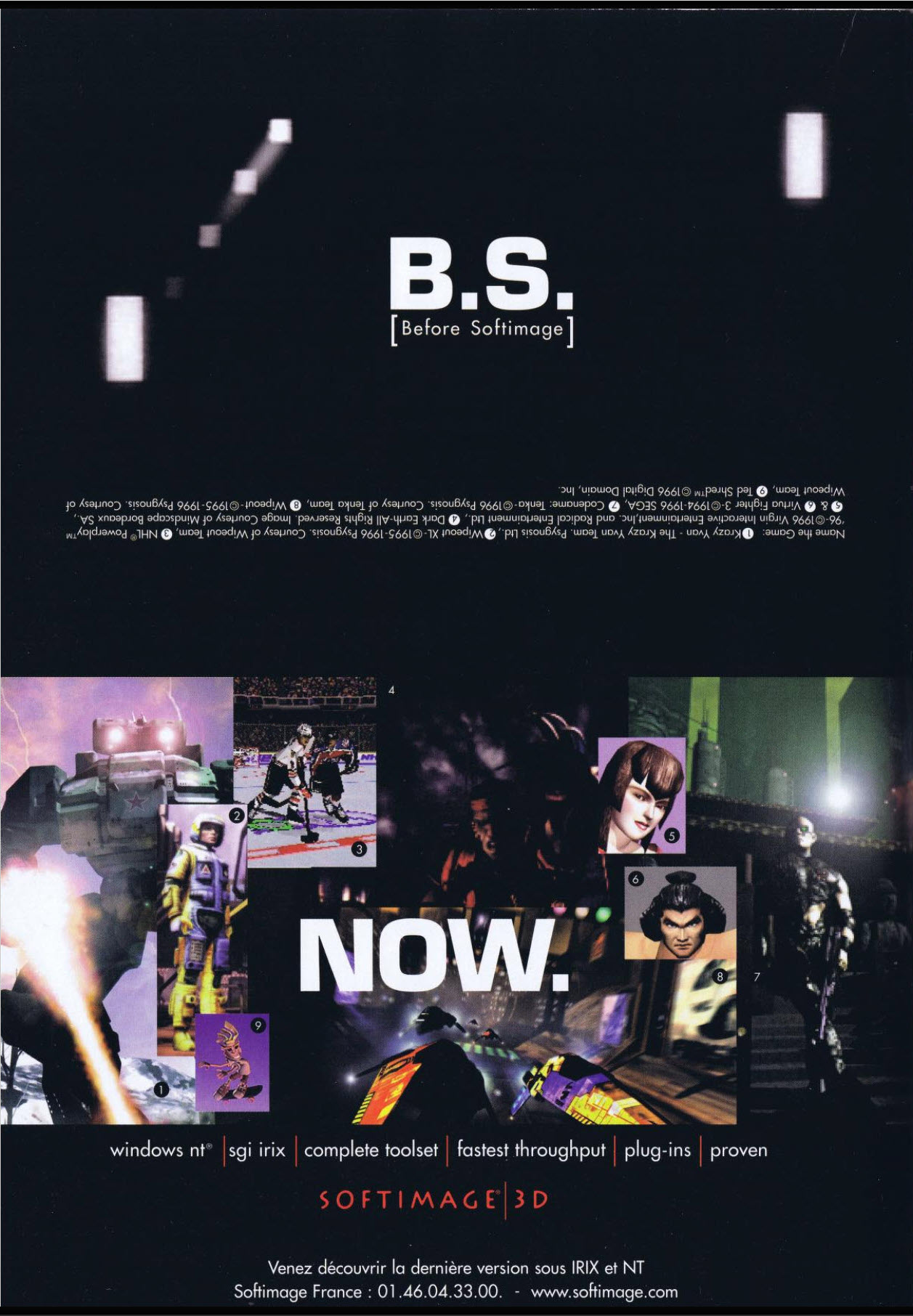
Psygnosis, one of Sony Computer Entertainment’s top game developers, uses Softimage to create the realistic lighting and intense environments found in a majority of its games, such as the soon-to-be-released action-packed shooter game Tenka.

“With the unique modeling, powerful animation and accurate lighting systems of Softimage, we are able to achieve a level of realism on the PlayStation that we never before thought possible,” said Neil Thompson, senior artist at Psygnosis.

Softimage Continues to Further Enhance Game Development For PlayStation Game Console

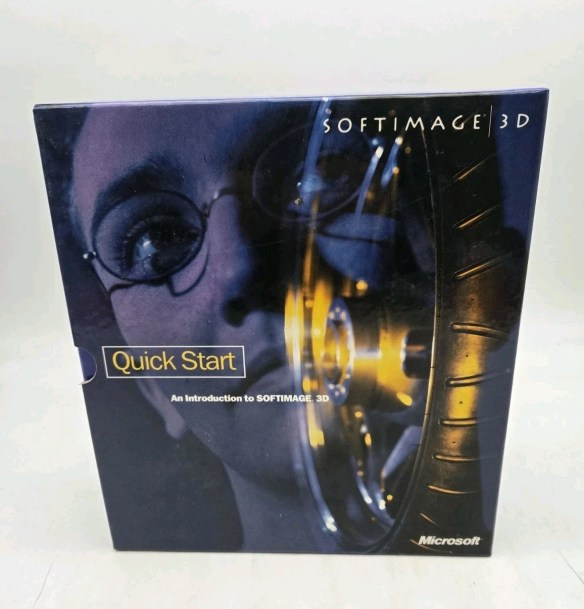
MONTREAL, May 6, 1997 — Softimage Inc., a wholly owned subsidiary of Microsoft Corp., today announced that it has worked with Sony Computer Entertainment Inc. to produce a new Game Development Environment (GDE) for licensed PlayStation developers using Softimage® 3D. The new GDE provides tools for seamless import and export of modeling and animation data that makes it easier for developers to create stunning graphics with Softimage 3D that maintain their look on the PlayStation game console. The GDE also allows developers to exploit fully the graphics performance of the PlayStation game console.

“Our relationship with Sony Computer Entertainment demonstrates our commitment to providing the most powerful set of game development tools in the industry,” said Moshe Lichtman, president of Softimage. “By working directly with Sony Computer Entertainment to optimize Softimage 3D for the PlayStation game console, Softimage is offering PlayStation developers the most comprehensive, cost-effective solution for that powerful platform.”

Software engineers from Softimage and Sony Computer Entertainment worked closely to develop the new GDE, which includes tools for the import and export of geometry, hierarchies, camera, lights, materials, textures, animation and polygon rendering attributes to ease the production process. A polygon attribute editor allows designers to control PlayStation specific rendering attributes on a per-polygon basis, and an on-target viewer allows designers to quickly preview the contents of their Softimage scenes on the development hardware. The on-target viewer provides powerful camera manipulation modes, scene information and playback control. These tools help ensure that high-quality content created in Softimage 3D will maintain its rich, dynamic look when played back on PlayStation game consoles.

Sony Computer Entertainment’s comprehensive support for its developers allows the platform to host some of the world’s most popular game titles. “Sony Computer Entertainment has always made developer support a top priority,” said Shinichi Okamoto, vice president of research and development, Sony Computer Entertainment Inc. “The new Softimage GDE will enhance development and help produce the blockbuster titles of the future.”

Psygnosis, one of Sony Computer Entertainment’s top game developers, uses Softimage to create the realistic lighting and intense environments found in a majority of its games, such as the soon-to-be-released action-packed shooter game Tenka.

“With the unique modeling, powerful animation and accurate lighting systems of Softimage, we are able to achieve a level of realism on the PlayStation that we never before thought possible,” said Neil Thompson, senior artist at Psygnosis.

Softimage 3D was used to create content for a variety of outstanding game titles for the PlayStation game console, a few of which are listed here:

  • Time Commando (Adeline Software)
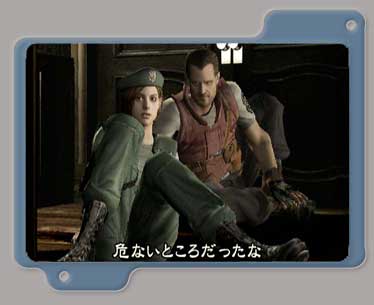
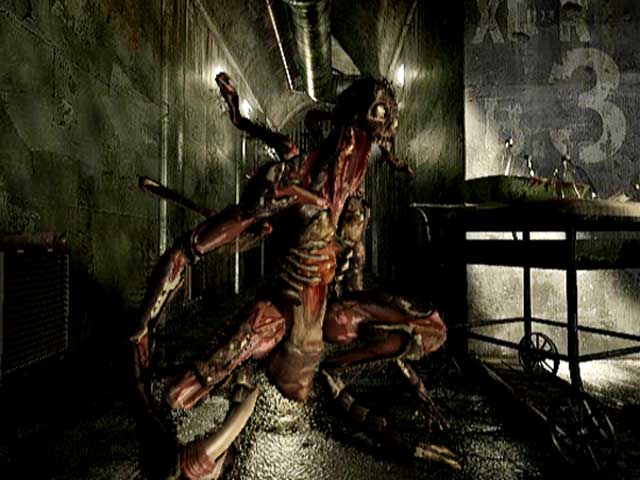
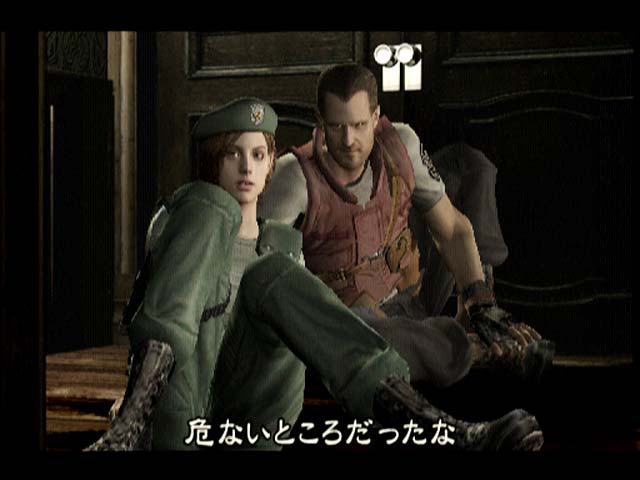
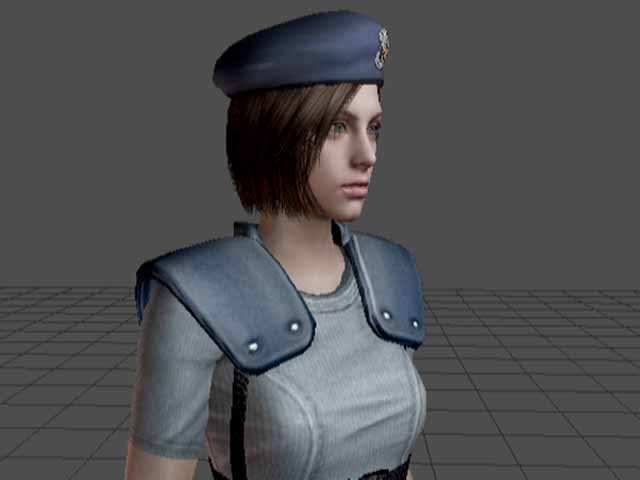
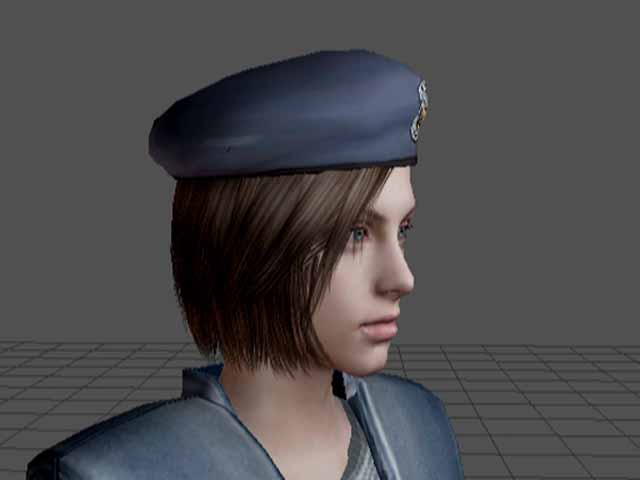
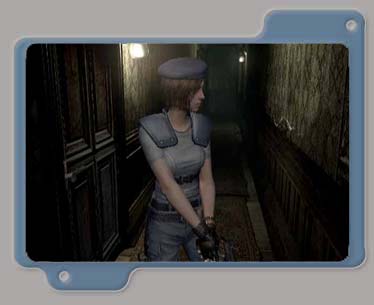
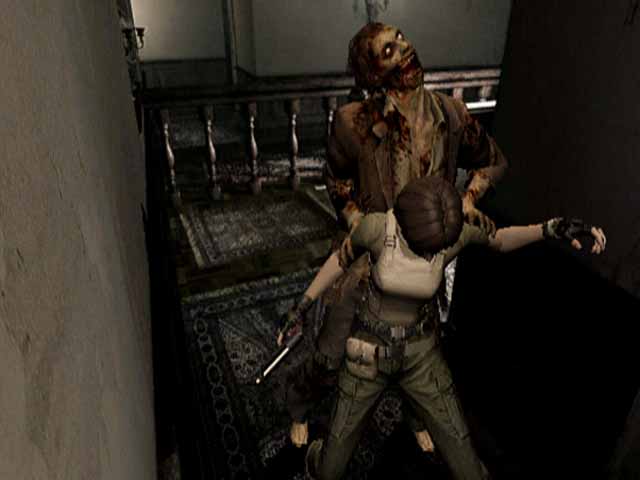
  • Resident Evil (CAPCOM)
  • Tobal No. 1 (Dream Factory)
  • FIFA Soccer (Electronic Arts )
  • NBA Live (Electronic Arts)
  • Need for Speed (Electronic Arts)
  • John Madden (Electronic Arts)
  • Soul Blade (NAMCO)
  • Tekken (NAMCO)
  • Tekken2 (NAMCO)
  • Tekken3 (NAMCO)
  • Wipeout (Psygnosis)
  • Krazy Ivan (Psygnosis)
  • Destruction Derby 1 & 2 (Psygnosis)
  • Assault Rigs (Psygnosis)
  • Formula 1 (Psygnosis)

Friday Flashback #501


TEAM WORK ON BATTLEZONE II

Softimage/AVID and Pandemic Studios Rock our World

Softimage and Pandemic Studios are joining forces to collaborate on Battlezone II. Pandemic is producing the playable game, while Softimage/AVID is creating their opening cinematic sequence. The result is an exciting sequel to Battlezone, with a kick-ass introduction.

The three-minute introductory sequence for Battlezone II is part of a new initiative by the Content Group at Softimage/AVID to make several in-house productions each year. The Content Group has a team of four full-time staff in its production wing who are eager to illustrate how creative potential can be realized using SOFTIMAGE|3D and AVID products.

“We worked in concert with Softimage on the game’s cinematic sequence,” explains Carey Chico, Pandemic Studios’ art director on Battlezone II. “The Content Group wanted to do a ‘real world’ project. The idea is to use their skills to contribute to a product for the marketplace.”

The Content Group wants to observe and participate while clients’ use DS, SOFTIMAGE|3D and their AVID tools in a true production setting—respecting the demands of deadlines and rounds of modification. Sharing creative and production challenges leads to further understanding of game production.

“This collaboration with Pandemic gives us production-proven experience working with real models and real game engines,” confirms Jean-Philippe Nicou, the manager of the Content Group at Softimage/AVID. “We couldn’t ask for a better project because Battlezone is a prize-winning game that everyone knows.”

Unlike most sequences found at the beginning of games, the Battlezone II sequence will offer up more than passing scenery.

“When game developers do an intro sequence, it usually tells you nothing about the objective of the game,” explains Alexandre Joset, an artist in the Content Group at Softimage/AVID who is working on the project full-time. “In ours, the sequence provides important narrative information for the game. A missile from an unknown planet crashes into the weapons platform, Voyager II, and it explodes. The commander sends two tanks to scout out the base. They get blown up. There’s an alien invasion, a battle, and the commander in the communications center sends an SOS. That’s when the game starts—when people come to check out what happened.”

Pandemic is working closely with the Content Group on the sequence. Pre-modeled characters, creatures, environments and vehicles were shared for the project. Both teams had a slightly different “canvas”, so Joset’s team needed to integrate the overall look and feel of the sequence with the game.

“The difference between the gaming and the film industry is that we’re bent on optimizing our models for the gameplay,” explains Carey Chico. “The one thing we adhere to is that we wanted the intro movie to look very similar to what you see in the real game. So there’s a one-to-one relationship.”

Sometimes that’s a challenge. An interactive game requires models with fewer polygons than a straight, cinematic sequence.

“And we want it to look seamless,” adds Joset. “For most of the space craft and tanks, we’re using the in-game models, but with higher resolution textures. And we’re adding motion blur. You can’t do that in a game—not yet. Shadows and lighting were also very important to us. The game has great lighting effects, so we want the intro to have a nice feel too. We used hand animation, and motion capture, which we ran through the Channel feature of SOFTIMAGE|3D. We also assembled the movements using the Action tool.”

Jason Stambollian, another 3D animator in the Content Group, used SOFTIMAGE|3D to do the initial modeling for the Voyageur II probe, which transforms into a battle-mode vehicle.

“The Voyager II tries to shoot an alien missile that’s headed its way,” explains Stambollian. “I modeled the missile and the missile train and the environments—like the star field, the planets, and the overall ambiance in space—using SOFTIMAGE|3D.”

The Content Group also employed DS for the sequence. While the 3D elements were obviously done in SOFTIMAGE|3D, the editing and certain effects were pure DS. The cross hairs, the “blip, blip” effects and the “locked on” effects were all done in DS, as was the text and editing.

Arthur Pequegnat, a digital artist in the Content Group, describes the challenges of his assignment using DS: “Timing the elements is key. Because the shot is zooming in, we have to increase the size of the images. So it’s a case of lining up the graphics in DS with the ever-changing 3D elements. It was almost a rotoscope job in the sense that I had to animate my graphics. I was using rectangles and poly lines and frame-by-frame steps and set key frames, to make sure that the cross hairs lined up with the 3D element.”

Pequegnat put the “clip effect” in DS to good use, along with “replace edit”, to speed up production time on the sequence even further.

“These features let me see where my effect has to start happening in the sequence, and I can see a direct co-relation between my clip underneath and my effect on top of it. The cool thing is that whenever a newly revised render comes along, all I have to do is replace the render and all my effects remain in tact. I recapture the new 3D elements and replace the old one with the new one on the timeline. If the timing on the 3D element changes, I just tweak my effects a bit. It’s a powerful way to approach things.”

Together, Pandemic Studios and Softimage/AVID are moving towards their self-imposed release deadline. Softimage is always interested in how clients apply their products to specific projects. This kind of collaborations reveals clients’ workflow patterns and methodology that is valuable for customer support, and the development of future versions of the software.

Activision is a registered trademark of Activision, Inc. ©1998 Activision, Inc. Battlezone is a trademark of Atari/JTS Corporation ©1980, 1998 Atari/JTS Corporation. All rights reserved, Licensed by Activision.