An XSI 5.11 screenshot. It looks kinda like Venice, which is where I’ll be by tomorrow afternoon 🙂

Friday Flashback #119
5

An XSI 5.11 screenshot. It looks kinda like Venice, which is where I’ll be by tomorrow afternoon 🙂
Sometimes you’ll see an ICE tree in italics in the explorer.

The italics mean that the ICE tree is not owned by the object, but by another object. By “not owned”, I mean that the ICE tree is not plugged into an execute port on an ICETree node in the stack of the object. In this case, the italicized ICETree is not owned by Growing_Strands_PointCloud, but by polymsh.
Roughly speaking, the italics mean “this ICE tree isn’t defined here, but it does use this object”.

Note that you can drag this shared ICE tree to another location in the stack.
I came across my hoard of SPM-licensing-related snippets the other day. I used to use these back at Sofimage to answer the never-ending stream of licensing questions we used to get.

These snippets were all stuff like this:
//----------------------------------
// Uploading a file to FTP
//----------------------------------

Hi

You can upload the log to ftp.softimage.com/incoming
Use Internet Explorer to go to ftp.softimage.com/incoming

Then open a Windows Explorer window, and drag the log from Windows Explorer to IE.


//----------------------------------
// Troubleshooting template for this error:
//
// We could not read your hostId. We need this information to activate your software
//
//----------------------------------


Can you go through the following and let me know what happens?


If you are on Vista, you must run the License Manager as an Administrator:

   1. Click Start > All Programs > Softimage Products.
   2. Right-click License Manager and click Properties.
   3. Click the Compatibility tab.
   4. Under Privilege Level, select the Run the program as an administrator check box.
   5. Click OK.

Check that DONGLE_TYPE is set to SLP:

- Start the License Manager (click Start > All Programs > Softimage Products > License Manager).
- Click Edit Config File.
- Scroll down until you see the line that starts with "DONGLE_TYPE".
- Make sure that DONGLE_TYPE is set to SLP
    DONGLE_TYPE=SLP
- Click Save.

Reinstall the license server service:

- In the License Manager menu bar, click Uninstall License Server Service.
- Click Install License Server Service.


Try to generate a request code:

- Click Manage Key Database.
- If the Rename Key Database button is enabled, click it.
- Click Generate Request Code. You should see something like this:

* 0.9b  Anybody 0
> computer_name -00D0D0D680--SLP   (2 PentiumPro)  Windows NT 6.0 [6000]  -SSPM-0 #0
023RA3JL WGZH30MD 8LYECAPU JH6F8NXM ZA2VP6L6 T27D7GYG 8SUZNZUM FZ0ULWVD
UNTD3LDV NYZ0J73C CUEZ0M50 ERWX8TVK F5MXS661 KHFGRY5E RXN2P88


If you are able to generate a request code, then try again to activate your license.
Otherwise, if you get an error when you click Generate Request Code, please send me the SPM server log (c:\spm\spm.log).


//----------------------------------
// Essential Trial Download problems (endless loop)
//----------------------------------


If you go to http://softimage.com/downloads/XSI_ess_trial/default.aspx and login, when you get to the page that says this:


	Thank you for registering for the XSI Essentials v.6.5 30-day trial Download.
	You will receive a confirmation email shortly. Please follow the instructions in the confirmation email to complete your registration.

then refresh your browser. You should then see the download links.


//----------------------------------
// Install a .keys file
//----------------------------------

I generated a temporary license for you.
You will receive the license in a separate e-mail message.
The e-mail message will include a .keys attachement.

To install the license key:

- Save the attached .keys file in C:\spm.
- Start the License Manager (click Start > All Programs > Softimage Products > License Manager).
- Click Manage Key Database.
- If Rename Key Database is enabled, click it
- Click Install Keys, click the .keys file, and click Open.
- Close the Manage License Keys dialog box.
- Click Start Server.


If you cannot install the license key, do this:
- Click Generate Request Code
- Send me the request code (you can copy the request code by highlighting it with your mouse and then pressing CTRL+C).


To install the license key:
- Save the attached .keys file in C:\spm.
- Start the License Manager (click Start > All Programs > Softimage Products > License Manager).
- Click Manage Key Database.
- Click Install Keys, click the .keys file, and click Open.
- If you get an error, click Rename Key Database and try again.
- Close the Manage License Keys dialog box.
- Click Start Server.


//----------------------------------
// Deactivate a license
//-----------------------------o-----


To deactivate a license:

1. Start the License Manager (click Start > All Programs > Softimage Products > License Manager).
2. In the menu bar, click Server > Deactivate.
3. In the License Deactivation dialog box, enter your softimage.com login name and password, and your registration code.
4. Click Deactivate.


//----------------------------------
// Move an SLP license to a new PC
//----------------------------------


If you get a new PC, then do this:

- Deactivate the license on your old PC
- Activate the license on your new PC

This requires an Internet connection.


To deactivate a license:
1. Start the License Manager (click Start > All Programs > Softimage Products > License Manager).
2. In the menu bar, click Server > Deactivate.
3. In the License Deactivation dialog box, enter your softimage.com login name and password, and your registration code.
4. Click Deactivate.


To activate a license:
1. Start the License Manager (click Start > All Programs > Softimage Products > License Manager).
2. Click Get License.
3. Under Registration Code Activation, enter your softimage.com logon information and your registration code.
4. Click Activate.


//----------------------------------
// Previous Versions
//----------------------------------


You can get 4.2 from our Previous Versions download page:

- Go to http://www.softimage.com/downloads/previousVersions/default.aspx
- In the list of products, click OLDER VERSIONS.
- Scroll down until you see the 4.2 download links


You can get 5.11 from our Previous Versions download page:

- Go to http://www.softimage.com/downloads/previousVersions/default.aspx
- In the list of products, click OLDER VERSIONS.
- Scroll down until you see the 5.11 download links


You can download XSI 6.02 from the Previous Versions section on softimage.com/downloads.

- Go to http://www.softimage.com/downloads/previousVersions/default.aspx
- In the list of products, click OLDER VERSIONS.
- Scroll down until you see the 6.02 download links


//----------------------------------
// Download Foundation License Key
//----------------------------------


If you need to re-download your license key:

- Go to http://www.softimage.com/getfoundation
- Logon
- Enter your registration code
- Select the Foundation Version (4.x or 5.x)
- Select Windows or Linux
- Select the usage (Personal or Work)
- Click Validate


//----------------------------------
// Download SPM
//----------------------------------

You can download the latest version of SPM from our Web site:

- Go to www.softimage.com/downloads
- Under SOFTIMAGE|XSI 6.5 Advanced, click Downloads
- Download SPM Server 1502 - Windows 32-bit & 64-bit
  This version of SPM works with all versions of XSI (6.5 and earlier)


//----------------------------------
// Switch from SLP to SI0
//----------------------------------


That is not a dongle request. Sorry, I should of anticipated this.

You need to do the following:


- Start the License Manager (click Start > All Programs > Softimage Products > License Manager).
- Click Edit Config File.
- Scroll down until you see the line that starts with "DONGLE_TYPE".
- Change DONGLE_TYPE to "SI0" (that is S-I-zero)

    DONGLE_TYPE=SI0

- Click Save.

- Click Manage Key Database.
- Click Rename Key Database.
- Click Generate Request Code.

The request code should look like this:

0.9b  Anybody 0
> dongle_host -003C2FD520051108531248-SI0   SISPM-0 #0
6SNENX2W 2VZH2JYU FNXX30PV 7V131ZFH EW2RV9LM 30ER7TG3 NAWAGRZV 8CY1JWM7
ZFUATGEP XV6LT7DU DAXG7TSZ X3C989DC 82W15UZW ZC24L3WN RNN0S8VV MRLMP


digital_revolutions


//----------------------------------
// Face Robot download
//----------------------------------


I'm sorry, but we do not have a Trial version of Face Robot.
The Face Robot downloads are for customers who have already purchased Face Robot.

If you are interested in evaluating Face Robot, please see this Web page for information:
http://softimage.com/products/facerobot/interested/


//----------------------------------
// To generate request codes from dongles
//----------------------------------


We need a request codes from the dongle.
Here's how to do it:


1) If you have not done so already, plug in the dongle.

When you plug the dongle in, the New Hardware Wizard should open.
In the New Hardware Wizard, do this:
   - Click No, not this time.
   - Click Install from a list or specific location (Advanced).
   - Click Don't search. I will choose the driver to install.
   - Click USB iButton holder for SPM.
   - Click Next.
   - Click Finish.

2) Generate a dongle request code:

- Start the License Manager (click Start > All Programs > Softimage Products > License Manager).
- Click Edit Config File.
- Scroll down until you see the line that starts with "DONGLE_TYPE".
- Change DONGLE_TYPE to "SI0" (that's a zero)

    DONGLE_TYPE=SI0

- Click Save.
- Click Manage Key Database.
- Click Rename Key Database.
- Click Generate Request Code.

The request code should look like this:

0.9b  Anybody 0
> dongle_host -003C2FD520051108531248-SI0   SISPM-0 #0
6SNENX2W 2VZH2JYU FNXX30PV 7V131ZFH EW2RV9LM 30ER7TG3 NAWAGRZV 8CY1JWM7
ZFUATGEP XV6LT7DU DAXG7TSZ X3C989DC 82W15UZW ZC24L3WN RNN0S8VV MRLMP


3) Send the dongle request codes to License@softimage.com.
Here’s an ICE tree that emits points from the polygons on the emitter, using their PolygonPosition attributes.
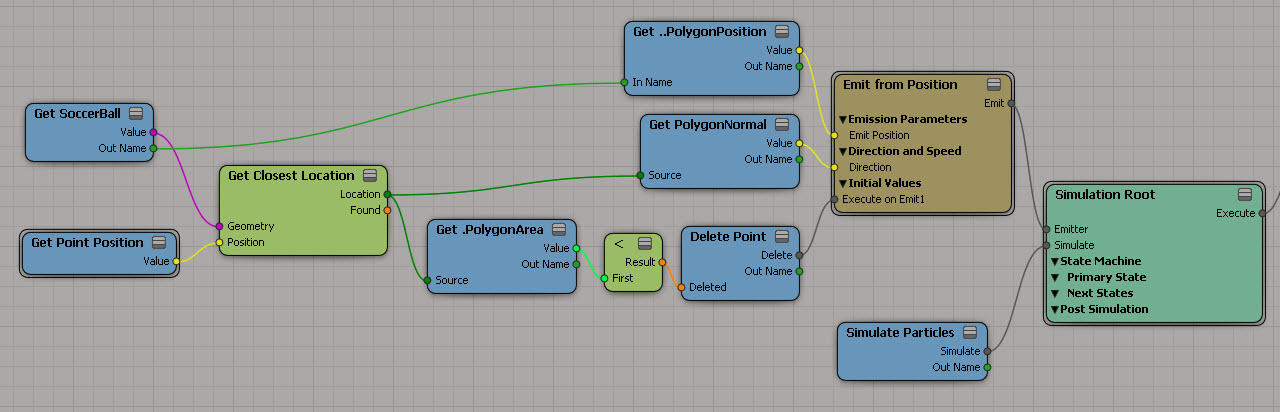
As an exercise, I went to the trouble of using the PolygonNormal as the direction vector. That was slightly complicated, because I couldn’t use the EmitLocation attribute to get at the PolygonNormal. I had to use Get Closest Location with the new PointPosition instead. That’s because when you use positions instead of locations with Add Point (which is inside Emit from Position), then the EmitLocation attribute is “meaningless”, to quote the documentation.
There’s no such thing as PolygonLocation, so I had to use the PolygonPosition attribute.
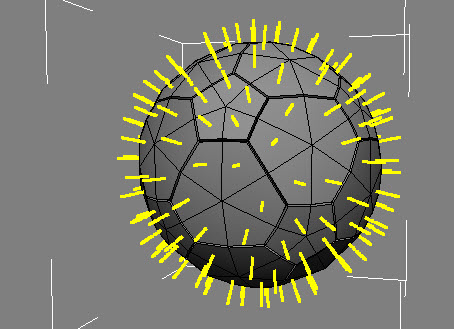
Note also that I filtered out some polygons, so that I emitted points only from the faces of the soccer ball.


TD Survival: Blocking points with ICE
https://vimeo.com/65245225
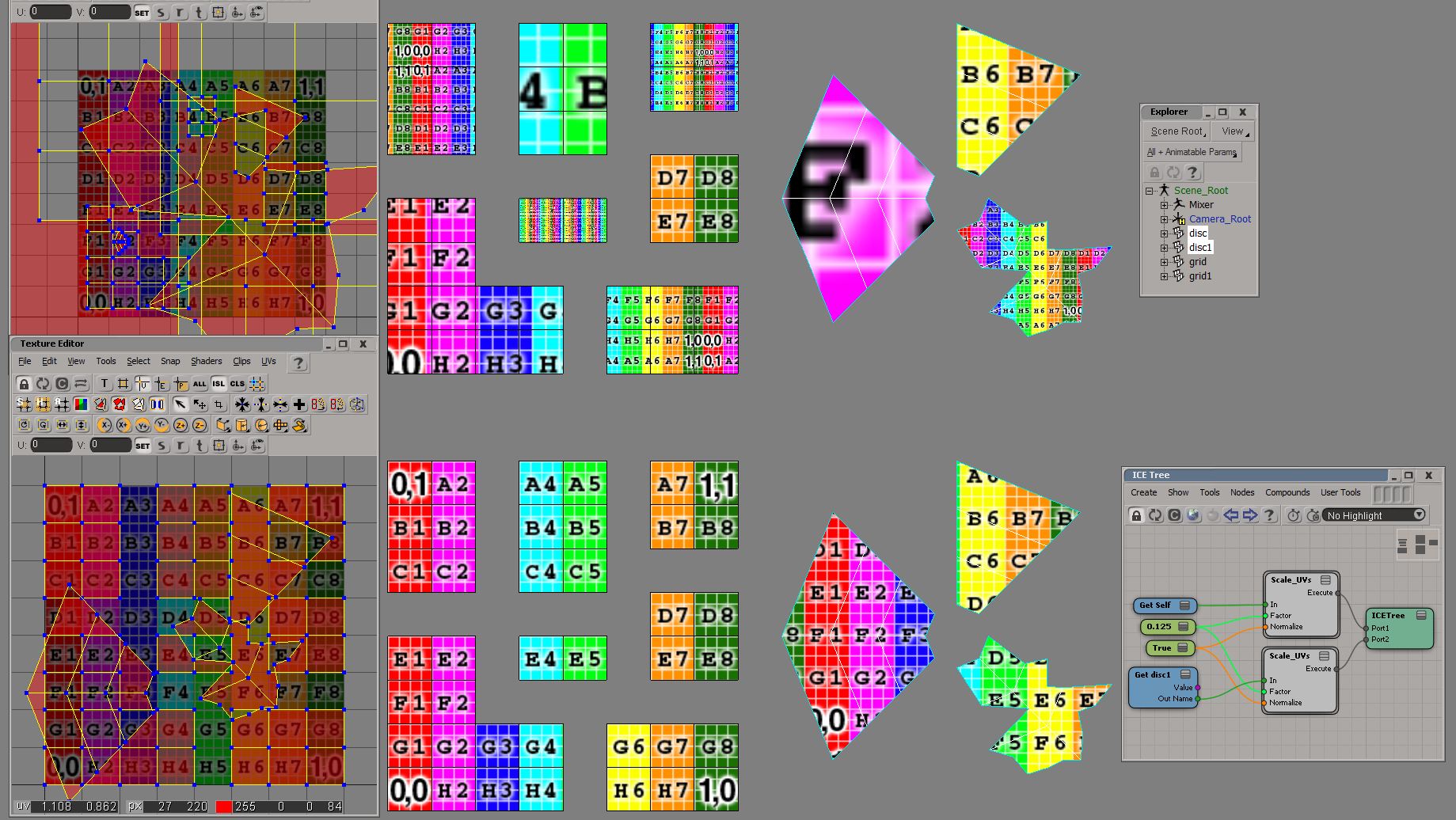
Scale UVs
by Vincent Ullmann
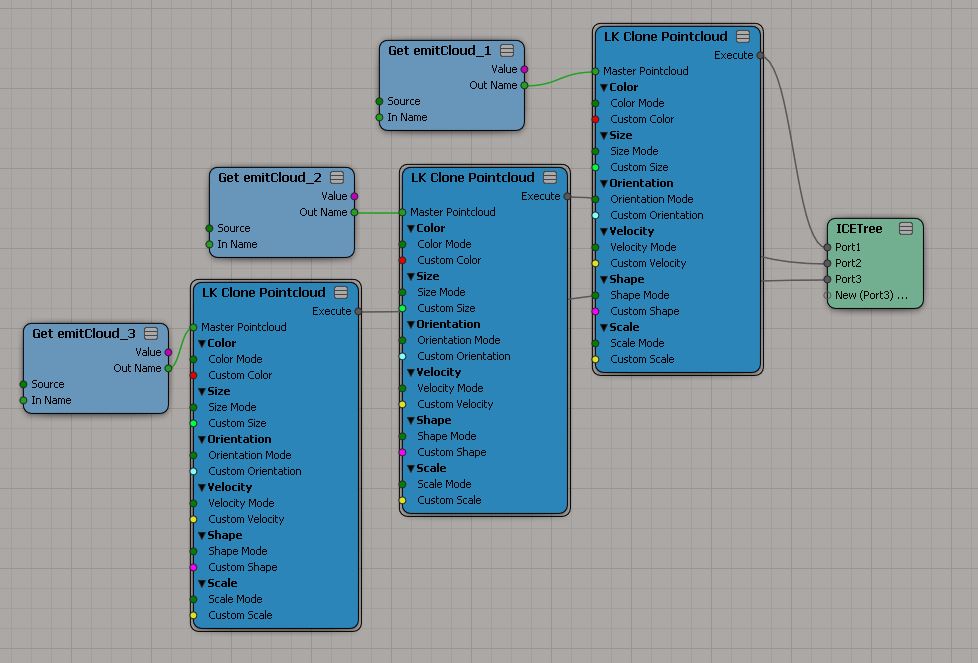
Cloning point clouds with attributes
by Vincent Ullmann

Cloning point clouds with attributes
by Leonard Koch
Creation: Horde
https://vimeo.com/61358674
Sticky Papers Tutorial
Add noise to texture coordinates
by gustavoeb

This is a bit of a snippet and a bit of a flashback. Back in the early days of “Sumatra scripting” (14 years ago), commands like GetValue didn’t have a return value. They had output arguments and you had to go through the ISIVTCollection to get the output value.
Here’s a classic example of the .Value(“Value”) syntax.
Name = GetValue("Sphere.Name").Value("Value")
On the emitter, get the texture map and use Color to Brightness to set an attribute. You’ll use this attribute to filter the Generate Sample Set.
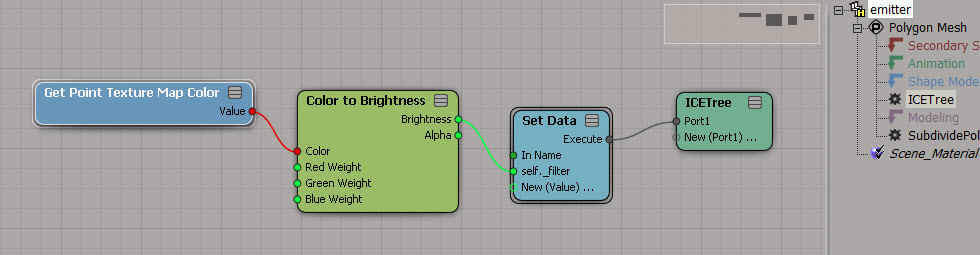
On an empty point cloud, use Generate Sample Set to add points. Use the emitter attribute to filter the added points.

Word cloud for xsisupport blog posts (titles only) since I left Autodesk.

 eX-SI
eX-SI 