SOFTIMAGE|3D screenshots from “back in the day” 😉
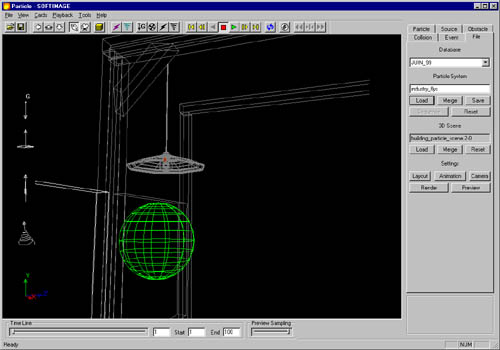
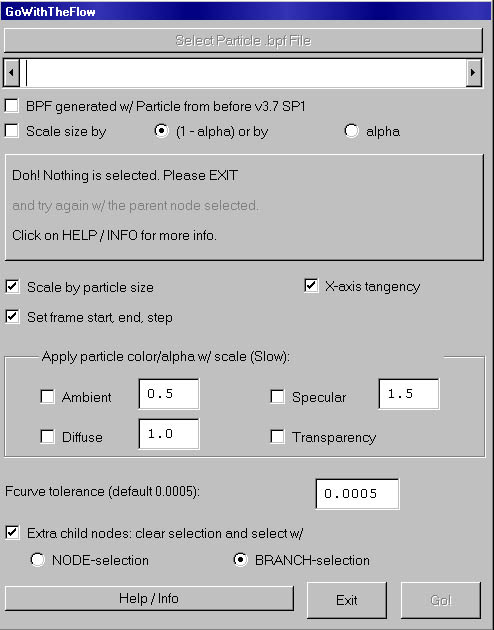
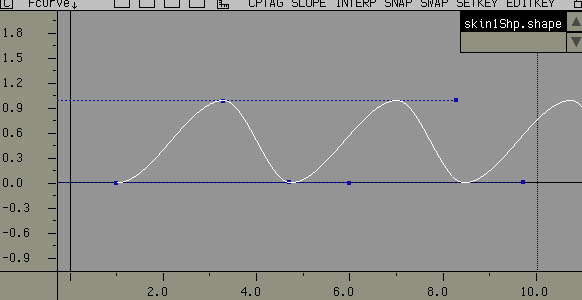

SOFTIMAGE|3D screenshots from “back in the day” 😉
LOS ANGELES, May 16, 1996 — As part of its latest high-end 3-D modeling, animation and rendering software, Softimage Inc. is introducing a more powerful version of mental ray, its distributed, fully programmable rendering environment for Softimage® 3D. With this new release, available with Softimage 3D Extreme or as a concurrent user network license, mental ray is significantly more capable, faster and easier to use. It supports many new innovations, including interface enhancements, an extensive library of shaders and effects, a robust development environment and support for cross-platform distributed rendering. All mental ray features, including distributed rendering, are now available for the first time on Intel® Pentium® Pro, Alpha and MIPS® RISC 4400-based systems for the Microsoft® Windows NT® operating system and Silicon Graphics® platforms.
In addition, Softimage has announced attractive pricing for network and standalone concurrent user licenses of mental ray that will enable customers to build extremely cost-effective distributed rendering networks, also called renderfarms. Renderfarms speed production work and lower costs.
As part of the Electronic Entertainment Expo (E3) here, Softimage is demonstrating a massive renderfarm, with mental ray, running in a network of more than 30 Windows NT and Silicon Graphics laptops, single and multiprocessor workstations, and servers based on Intel Pentium Pro, Alpha and the MIPS RISC 4400 microprocessor.
Several independent software developers, including Lightscape Technologies Inc. and The VALIS Group, are demonstrating new plug-in applications that enhance mental ray’s rendering capabilities. These plug-in applications are based on Softimage’s new software development kit.
Through a combination of advanced ray-tracing capabilities, procedural shaders, volumetric rendering, distributed processing and a programmable architecture, mental ray has established the benchmark for rendering quality by producing the industry’s most detailed, photorealistic images for films, videos, commercials and games.
Most recently, Buf Compagnie (France) used mental ray to produce imagery for the feature film “The City of Lost Children” (“La Citédes Enfants Perdus”).


R/Greenberg Associates (New York) used mental ray to create a photorealistic version of the Statue of Liberty for an Oldsmobile Aurora commercial.
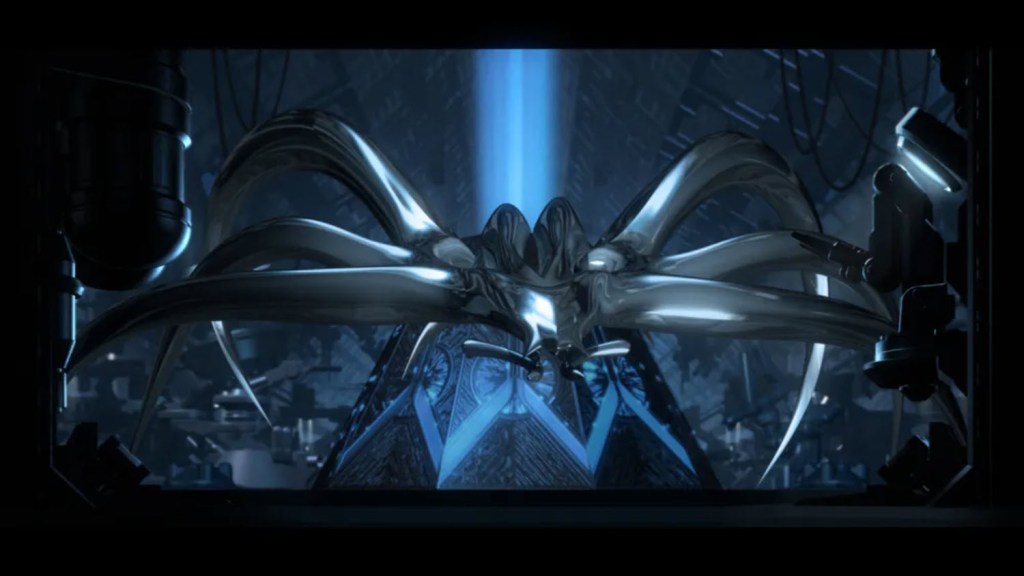
Digital Domain (Los Angeles) used mental ray to produce a stunningly realistic animated character, the T-Meg, for the Terminator 2 3-D attraction at Universal Studios Florida.
“Even the best animation system is not complete without the extendible capabilities of a fully functional, high-quality rendering solution,” said Daniel Langlois, founder of Softimage and senior director at Microsoft. “With mental ray, artists can easily create the type of complex, photorealistic and innovative imagery that provide a competitive edge in the industry.”
All mental ray enhancements are available for Windows NT-based workstations and servers and Silicon Graphics systems. The enhancements include the following:
In addition to mental ray distributed rendering, Softimage 3D version 3.5 includes many other significant enhancements including full NURBS (nonuniform rational B-spline) modeling, an enhanced particle animation system and other features.
Plug-in Applications
As part of E3, several ISVs plan to demonstrate applications developed with the Softimage SDK. Lightscape Technologies (San Jose, Calif.) is demonstrating the integration of the Lightscape Radiosity Server and Softimage 3D using the Softimage SDK. A viewer linked to the server will provide real-time display and navigation of the radiosity solution from within Softimage 3D. The VALIS Group (Tiburon, Calif.)will announce it plans to ship several cross-platform, procedural shaders that eventually will be included as part of its Shader of the Month Club for Softimage 3D. The VALIS Group develops and markets special-effects applications and a series of procedural shaders for Renderman.
Pricing and Availability
Softimage 3D and Softimage 3D Extreme are shipping today for the Silicon Graphics platform; Windows NT-based versions are scheduled to be available in August. Licensed users of Softimage 3D version 3.5 can obtain networked or standalone, cross-platform concurrent user mental ray licenses. Approximate U.S. prices are single license, $2,495; four-pack, $7,995; eight-pack, $13,995; 16-pack, $23,995; 24-pack, $29,995; and 48-pack, $47,995.
Founded in 1986, Softimage develops software for media-rich applications including video, film, interactive games and CD-ROM applications. Products include Softimage 3D (high-end modeling, animation and rendering), Softimage Eddie (compositing) and Softimage Toonz (2-D cel animation). The company was acquired in 1994 by Microsoft Corp. Additional information about Softimage and Microsoft can be found via the Internet at http://www.softimage.com/ and http://www.microsoft.com/ respectively.

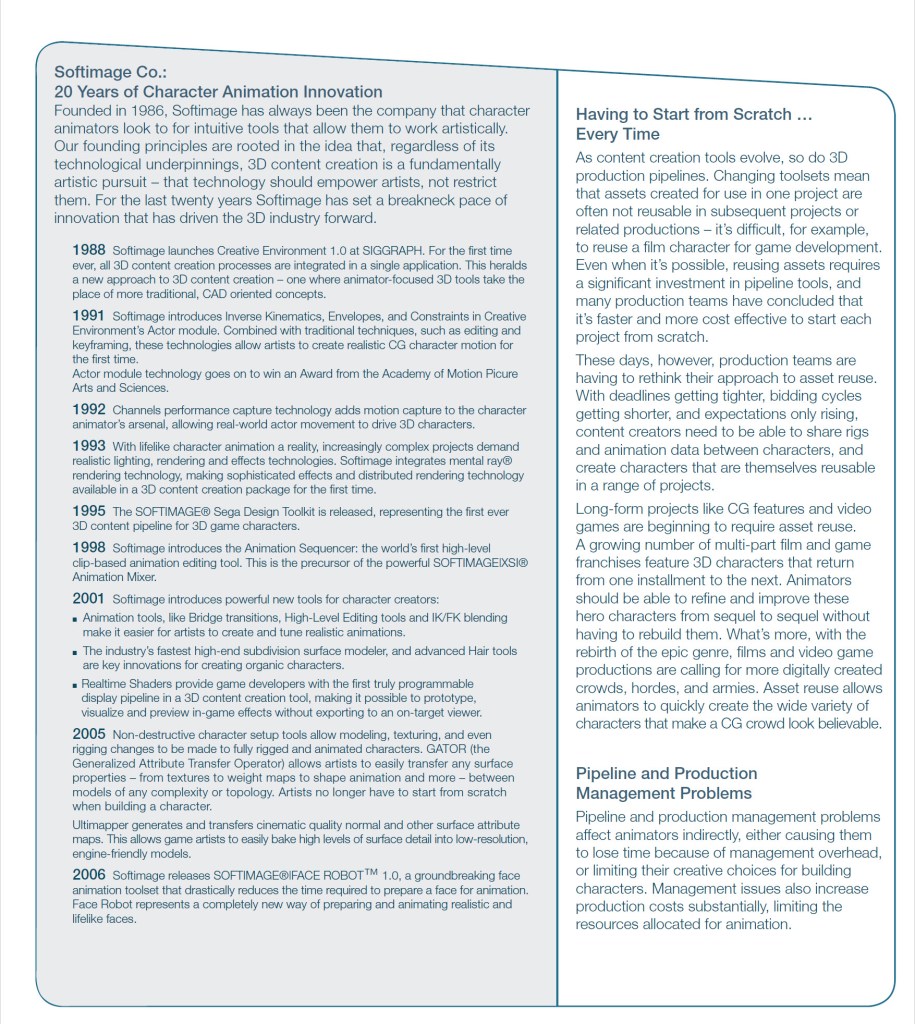
Softimage Co.
20 Years of Character Animation Innovation
Founded in 1986, Softimage has always been the company that character
animators look to for intuitive tools that allow them to work artistically.
Our founding principles are rooted in the idea that, regardless of its
technological underpinnings, 3D content creation is a fundamentally
artistic pursuit – that technology should empower artists, not restrict
them. For the last twenty years Softimage has set a breakneck pace of
innovation that has driven the 3D industry forward.
1988 Softimage launches Creative Environment 1.0 at SIGGRAPH. For the first time
ever, all 3D content creation processes are integrated in a single application. This heralds
a new approach to 3D content creation – one where animator-focused 3D tools take the
place of more traditional, CAD oriented concepts.
1991 Softimage introduces Inverse Kinematics, Envelopes, and Constraints in Creative
Environment’s Actor module. Combined with traditional techniques, such as editing and
keyframing, these technologies allow artists to create realistic CG character motion for
the first time.
Actor module technology goes on to win an Award from the Academy of Motion Picure
Arts and Sciences.
1992 Channels performance capture technology adds motion capture to the character
animator’s arsenal, allowing real-world actor movement to drive 3D characters.
1993 With lifelike character animation a reality, increasingly complex projects demand
realistic lighting, rendering and effects technologies. Softimage integrates mental ray®
rendering technology, making sophisticated effects and distributed rendering technology
available in a 3D content creation package for the first time.
1995 The SOFTIMAGE® Sega Design Toolkit is released, representing the first ever
3D content pipeline for 3D game characters.
1998 Softimage introduces the Animation Sequencer: the world’s first high-level
clip-based animation editing tool. This is the precursor of the powerful SOFTIMAGE|XSI®
Animation Mixer.
2001 Softimage introduces powerful new tools for character creators:
2005 Non-destructive character setup tools allow modeling, texturing, and even
rigging changes to be made to fully rigged and animated characters. GATOR (the
Generalized Attribute Transfer Operator) allows artists to easily transfer any surface
properties – from textures to weight maps to shape animation and more – between
models of any complexity or topology. Artists no longer have to start from scratch
when building a character.
Ultimapper generates and transfers cinematic quality normal and other surface attribute
maps. This allows game artists to easily bake high levels of surface detail into low-resolution, engine-friendly models.
2006 Softimage releases SOFTIMAGE®|FACE ROBOT™ 1.0, a groundbreaking face
animation toolset that drastically reduces the time required to prepare a face for animation.
Face Robot represents a completely new way of preparing and animating realistic and
lifelike faces.

