Screenshots of the week


Multiple uniquely textured objects – having only one shader

http://vimeo.com/52176053

Strands
Q: If I emit Strands from particles ( like rain streaks), and then spawning particles based on collisions with say a grid, the spawned particles inherit the strands, but they have this behavior where the strands are actually ahead of the actual particle from which they are supposed to trail.
A by PetrZ

Camera Sequence Tool

Face Robot Workflow – Part 7: Working with Mocap Files

Softimage Gear Advanced Character Rigging
http://vimeo.com/52018225

Softimage ICE Rigging Bone Strech

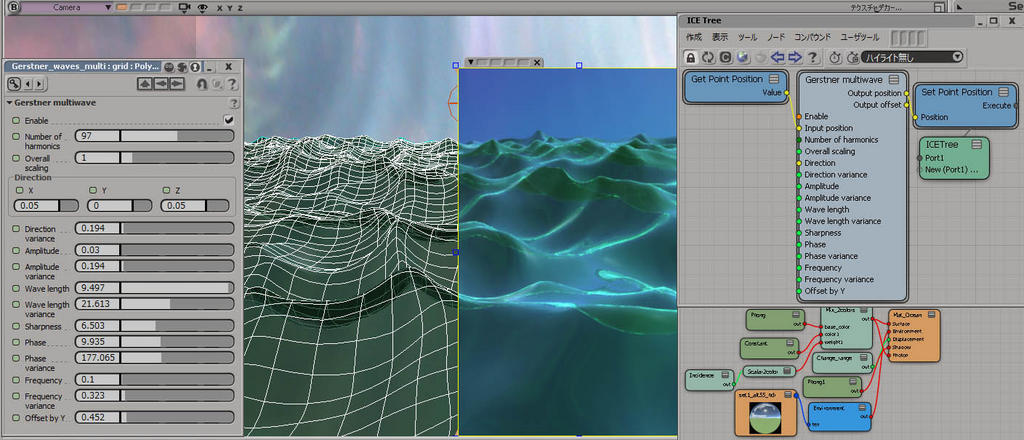
Gerstner muliwave
by SI_UserNotes

Glossy reflections in the Arnold standard shader


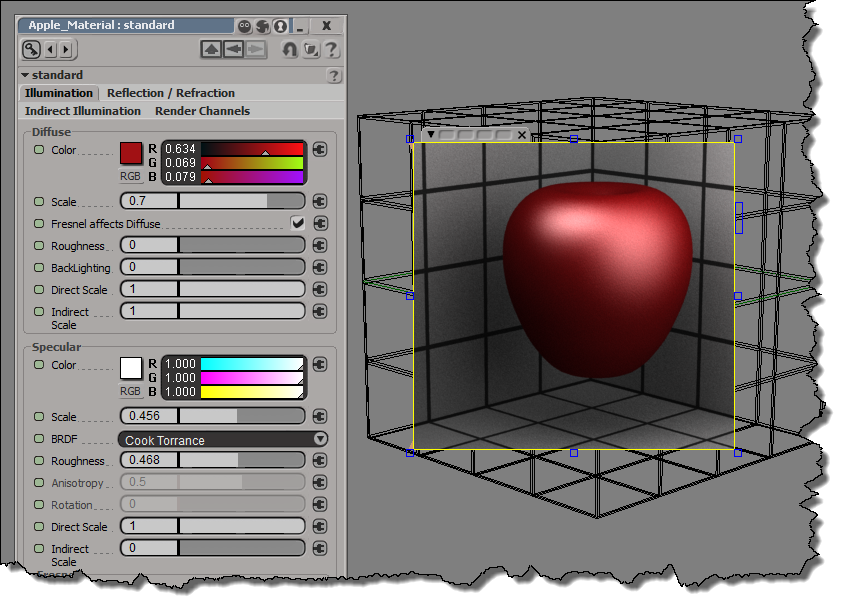
In the Arnold standard shader, you use specular reflections when you want glossy reflections. There’s direct specular (the “classical” specular hightlight) and indirect specular (glossy/blurry reflections), and both are part of the same BRDF behaviour. In this screenshot, direct specular (Direct Scale) is turned off, so you see only the indirect specular reflections. The Roughness makes those reflections glossy.
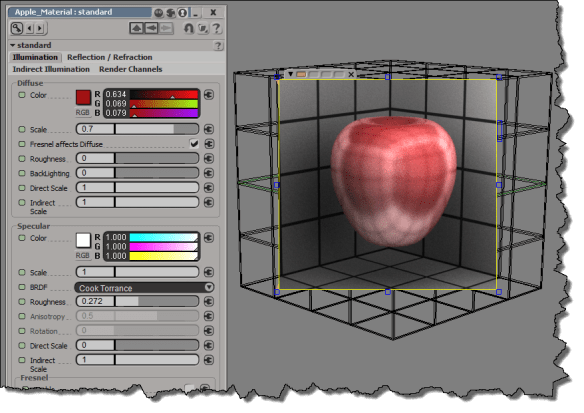
So what’s up with the separate Reflection/Refraction tab? Well, that tab gives you an alternate way to do sharp, mirror reflections (with no blurring or glossiness). However, with Specular, you can get pretty much the same thing by setting the Roughness to 0:

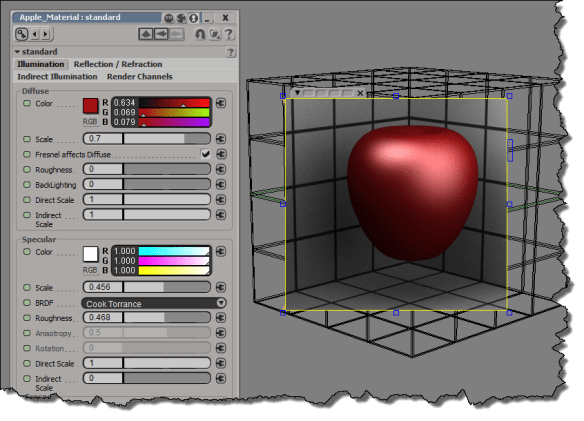
Finally, since I mentioned the direct specular, here’s the shaderball with just the direct spec:
ICE Modeling – Setting extrusion length and inset based on polygon area


Here’s a modified version of Mr Laforge’s compound that does the extrusion length and inset based on polygon area. Yeah, it uses a Repeat so I don’t think you would use it on a dense mesh and then just leave it in the stack to be reevaluated over and over.

The main idea is that you have to store the polygon indices (and the lengths and insets) before you do the extrude.

See also ICE Modeling – extruding polygons with random lengths

Might as well…change the default scene renderer


Goodbye for now, mental ray. Arnold is now my default scene renderer 🙂

File > Preferences > Rendering

Now everytime I start Softimage or create a new scene, Arnold will be the scene renderer. And I’ll have an Arnold light by default (Arnold doesn’t support the default Softimage lights).

And you’ll have all the Arnold render channels.

The SItoA addon includes some events for setting up new scenes when Arnold is the default renderer.

Saturday Snippet: Finding the Python and PyWin version


Courtesy of Eric Thivierge:

import sys
import os
import distutils
import distutils.sysconfig
site_packages = distutils.sysconfig.get_python_lib(plat_specific=1)
build_no = open(os.path.join(site_packages, "pywin32.version.txt")).read().strip()
print "Python version:   " + sys.version
print "PyWin32 version:  " + build_no

See also Supported versions of Python and PyWin